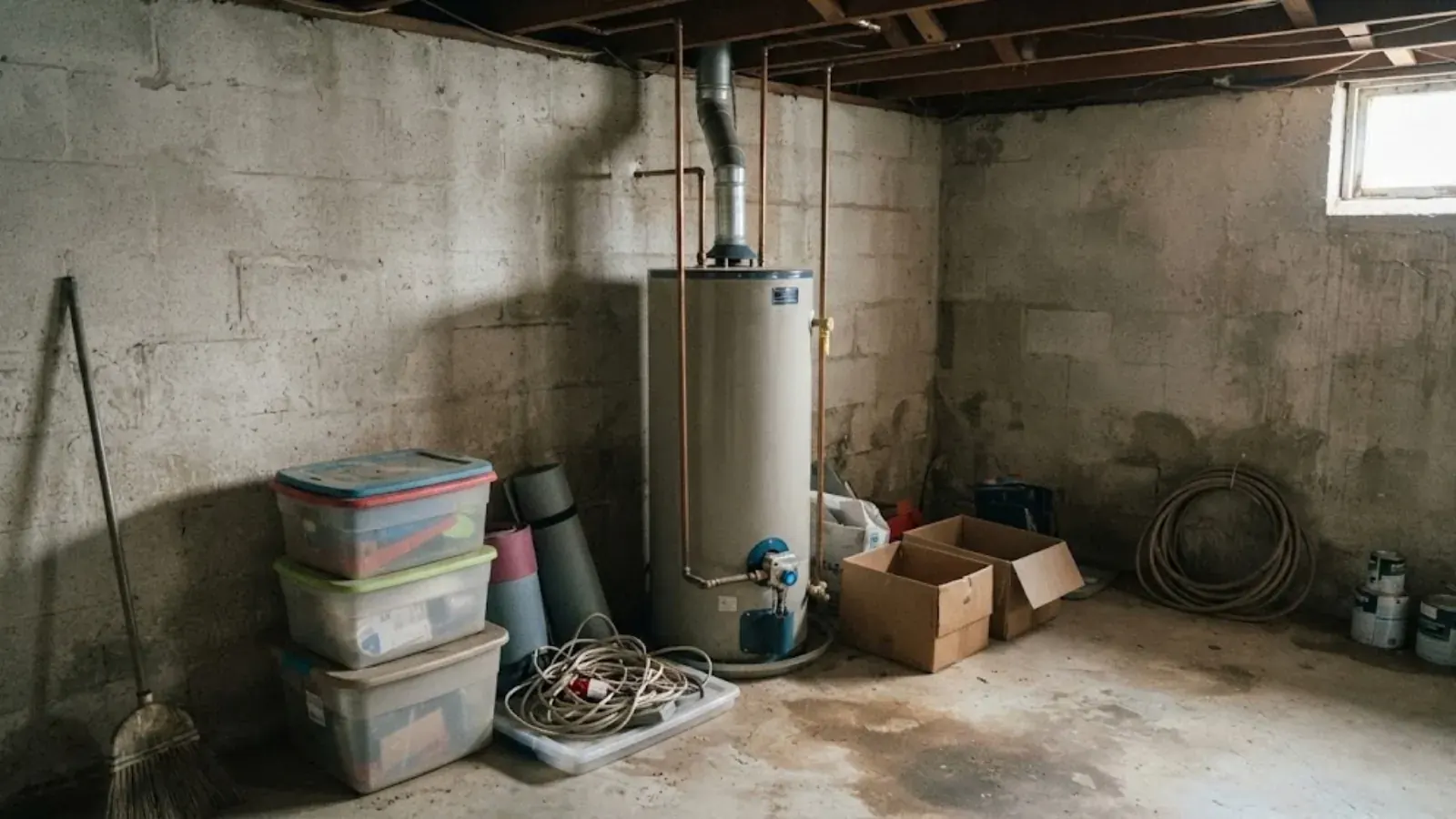
When a leaking water heater is an emergency
A tank that drips from a pipe fitting is a repair. A tank that is pouring water from the body or seam is usually finished, and every hour of leaking soaks drywall, flooring and anything stored nearby. Garages and hall closets are common spots in Huntington Park homes and apartments, so the damage often reaches a neighbor or a shared wall.
Tell the dispatcher what you see: where the water is coming from, how fast, and whether the heater is gas or electric. That lets us bring the right valves, elements and fittings on the first trip. Same-day appointments are available when the schedule allows, and the emergency line covers nights and weekends.
What each symptom usually points to
Most water heater calls come down to a short list of symptoms. This table shows what we usually find and whether a repair normally makes sense.
| Symptom | Most likely cause | Repair or replace |
|---|---|---|
| Water at the top of the tank | Loose or corroded inlet and outlet nipples, or a leaking union | Repair, usually a short job |
| Water from the relief valve pipe | Failed temperature and pressure valve, or high house pressure | Repair, plus an expansion tank check |
| Water at the base, tank wall wet | Corroded tank shell or a failed drain valve | Drain valve is a repair, a wet shell means replace |
| No hot water, gas unit | Pilot out, bad thermocouple, or failed gas control valve | Repair |
| No hot water, electric unit | Tripped high limit, dead element or bad thermostat | Repair |
| Hot water runs out fast | Burned lower element or heavy sediment | Repair and flush |
| Rumbling or popping noise | Scale hardened on the bottom of the tank | Flush, replace if very old |
| Rusty or brown hot water | Anode rod used up and the tank steel is corroding | Anode swap if caught early |
If the tank body itself is leaking, no part swap will stop it. In that case we walk you through the replacement options and explain how the numbers compare.
What to do while you wait
These steps limit damage and speed up the visit.
- Shut off the cold supplyTurn the valve on the cold pipe above the heater clockwise. If it will not move, use the main shutoff for the house.
- Cut power or gasFor electric units, switch off the heater breaker. For gas units, turn the dial to off or pilot. Do not do this if you smell gas, just leave.
- Protect the floorMove boxes and stored items, lay towels, and use a wet vacuum if you have one. Keep children and pets away from hot water.
- Note the labelTake a photo of the data plate showing brand, model, serial number and tank size, plus any error code.
- Clear the pathMake sure we can reach the heater, and tell us about stairs, a locked garage or an apartment shared utility closet.
If the heater sits in a rental, tell your landlord or property manager as well, since they often own the unit. California Health and Safety Code section 19211 requires water heaters to be braced against earthquake motion, so we check straps while the tank is open.
Leaks: fitting, valve or tank?
Before we call a tank dead, we dry every joint with a rag and watch where the first bead of water forms. Water runs downhill, so a drip at the base can start at the top. We check the supply connections, the relief valve, the drain valve, the burner compartment or element covers, and the water line that runs from the heater into the house.
That last line matters. A pinhole in a buried or in-wall hot line can mimic a heater leak, and we confirm the source before quoting anything. If the loss is somewhere else, our leak detection methods, such as acoustic listening and thermal imaging, find it without opening walls at random.
No hot water, lukewarm water and pilot problems
Check these quickly before you call. They separate a ten-minute reset from a part replacement.
- Gas unit, pilot or burner darkLook at the dial and the viewing window. A pilot that will not stay lit often has a worn thermocouple, and one that lights but gives weak heat can mean a dirty burner.
- Electric unit, breaker and resetCheck the double-pole breaker, then the red reset button behind the upper panel. If it trips again, a failed element or thermostat is the usual reason.
- Water is warm but not hotOn electric heaters, one dead element gives half the hot water. On gas units, a thermostat set too low or a sediment layer can do the same.
- Error codes on the displayMany newer gas and hybrid units flash a code. Write it down with the brand and model, because it tells us which sensor or board to test.
- Hot water only at one tapThat points to a mixing valve or cartridge at the fixture, not the heater. We would look at the faucet or shower valve instead.
Never relight a pilot if you smell gas. The safety note below covers what to do.
Gas, electric and hybrid heat pump repairs differ
The same symptom has different fixes depending on how the heater makes heat, so here is how we approach each type.
Gas tank heaters
The parts that fail most are the thermocouple, the gas control valve, the burner assembly and the vent draft. We test for proper combustion and a clear flue before we leave, because a blocked or backdrafting vent is a safety problem, not a comfort problem.
Electric tank heaters
Here we use a meter to test each heating element and thermostat for continuity, and we check the wiring for scorching. Elements are inexpensive parts, but a tank full of thick scale can make them fail again soon, so a flush often goes with the repair.
Hybrid and heat pump models
These have a compressor, fan, condensate drain and electronic controls on top of a normal tank. Many faults are simple, such as a clogged air filter or condensate line, but some board and sensor repairs depend on the manufacturer. We say up front when a part is a warranty matter for the maker instead.
What affects the cost of water heater repair
We quote the repair after we diagnose it, and you see the price before work begins. These are the things that move the number.
Call the 24/7 line, describe the symptom and the heater type, and we will explain the price range and the next step before we dispatch.
Call (213) 672-5590Flushing and anode rod service
Huntington Park tap water is very hard by the USGS scale. The city reports an average of 214 mg/L for local groundwater and 235 mg/L for Metropolitan Water District supply, roughly 12.5 and 13.7 grains per gallon. That scale settles on the tank floor, coats elements and burners, and shortens heater life, and the blend can shift by tap and season.
A yearly drain and flush clears loose sediment, and checking the anode rod tells us how much protection is left. A rod worn down to its steel core can be swapped for a fraction of the cost of a new tank, which is why we recommend it on heaters under about eight years old. If scale keeps returning, a softener or filter treats the cause.
Safety note for gas heaters
If you smell gas near the heater, do not touch switches, flames or phones in the room. Leave the home, call SoCalGas or 911 from a safe place, and call us afterward. We will not relight or repair a gas appliance until the leak is cleared.
When repair stops making sense
Repair is usually the better call when the tank is sound and the failed part is a thermostat, element, valve or thermocouple. Replace is usually better when the shell leaks, the tank is well past a decade, or the repair would cost close to half of a new unit. We give you both numbers, not a sales push.
Our full guide to that choice is on the water heater replacement page. If your family is outgrowing the tank, an on-demand model may be worth a look, which the tankless water heater page explains.
Questions homeowners ask
Yes. Our emergency line is open 24/7, including nights, weekends and holidays, and same-day appointments are available when the schedule allows. Tell the dispatcher whether the heater is leaking, has no heat or smells of gas, and we will plan the visit around that. We never promise an arrival window, but we do prioritize active leaks.
Water at the base can come from the drain valve, a failing relief valve line or the tank shell itself. If the tank wall is rusted through or seeping, it cannot be patched and the tank needs replacing. We dry the heater and trace the first drip to see which one applies before recommending anything.
If the pilot lights and stays on, the fix was simple. If it keeps going out, the usual causes are a worn thermocouple, a draft, or a failing gas valve. We test each before replacing parts. If you smell gas, leave the home and call SoCalGas or 911 first.
Look at age, leak location and part cost. A sound tank with a failed element, thermostat or thermocouple is worth repairing. A leaking shell, heavy rust or a unit past about ten to twelve years usually is not. We give you both options so you can compare.
Yes, for many common faults, such as clogged filters, condensate drains, thermostats and sensors. Some board or compressor issues depend on the manufacturer's parts and warranty, and we tell you if the repair should go through them. Bring the model number and any code shown on the display.
Flushing drains out the sediment that settles at the bottom of the tank. With the very hard water the city reports, that layer builds up, makes rumbling sounds and wastes energy. A flush takes under an hour on a healthy tank, and we check the anode rod at the same time.
In most rentals the owner is responsible for the heater, so report the problem to your landlord or property manager in writing right away. We can send the diagnosis and a clear price to them, and we handle after-hours calls for property managers as well. We also serve neighbors like Bell and Maywood.