Water on the floor, a stain overhead, or a meter that will not stop
Most leak calls begin with a symptom, not a diagnosis. The bill doubled, a ceiling turned brown, the floor feels damp near a wall, or the meter dial keeps creeping when every tap is off.
Each of those has a short list of likely causes, and leak detection is how we tell which one you have. We test first, then recommend a repair, so you pay to fix the actual pipe and not a guess.
When a hidden leak is an emergency
Call the 24/7 line right away if water is running through a ceiling, pooling near electrical outlets or a panel, soaking a floor, or if the meter is moving fast with nothing in use. Water follows wiring and framing, and a small leak overnight can become a soaked ceiling by morning.
If you can reach the main shutoff, close it and open one low faucet to relieve pressure. We take after-hours, weekend and holiday calls because a leak does not wait for a business day. A pipe that has plainly split belongs on our burst pipe repair page.
What to do while you wait
These steps limit damage and make the diagnosis faster.
- Close the main shutoffTurn it clockwise and open one low faucet to drain the lines if water is actively running.
- Protect electronics and outletsMove devices away from wet areas and do not touch outlets near standing water. If water reaches a panel, stay away and call 911.
- Photograph everythingTake dated photos of stains, the meter reading and the damage. They help the plumber and any insurance claim.
- Note the meter numberWrite down the reading and the time so we can repeat the flow test and compare.
- Clear accessMove stored items from closets, the water heater area and crawlspace doors so the plumber can reach the pipes.
Do not cut into drywall yourself unless water is trapped and bulging, because it makes the leak harder to trace. Pressure testing follows the California Plumbing Code (UPC based), which is the reference we use for test pressures and acceptable pipe materials.
Meter still running or a high water bill
A bill that jumps with no change in how many people live in the home is the classic sign of a hidden leak. You can run the first check yourself. Turn off every fixture, the ice maker and the irrigation, then look at the leak indicator on the meter, usually a small triangle or dial. If it turns, water is leaving the house somewhere.
The meter flow test, step by step
Write down the meter reading, keep all water off for 30 to 60 minutes, then read it again. A changed number means a leak. Next, close the main shutoff at the house. If the meter stops, the leak is inside the house plumbing. If it keeps running, the leak is on the buried line between the meter and the house.
That one test cuts the search in half before any instrument is used. It also gives you something concrete to tell the plumber on the phone.
Silent leaks that mimic a leak
A running toilet flapper wastes more water than most people expect and makes almost no noise. Drop a few drops of food coloring in the tank, wait 15 minutes without flushing, and see whether color reaches the bowl. Dripping faucets, a stuck pressure relief valve on the water heater and a failing softener valve are other quiet culprits we check first.
Wet ceiling, damp wall or a stain that keeps growing
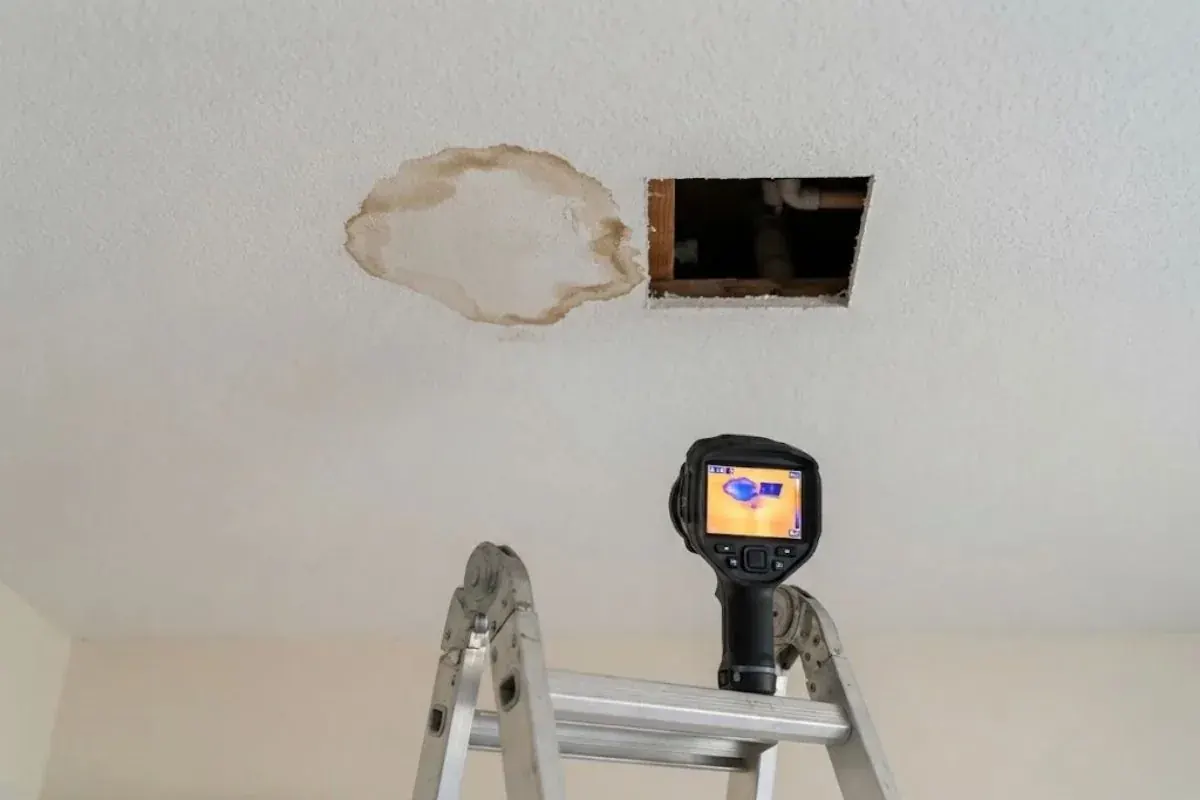
A ceiling stain is where the water ended up, not always where it started. Water can travel along a joist or pipe for several feet before it soaks drywall, so cutting a hole directly under the stain often misses the source. We use a moisture meter to map the wet area and a thermal imaging camera to see temperature differences behind the surface.
Not every stain is a supply leak. The source could be a shower pan, a bathroom above, a drain line, a roof or window leak, or condensation on a cold pipe. A pressure test of the supply lines and a fill test of the drain tell us which system is responsible, and that decides whether a plumber or a roofer is the right call.
Leaks under the house or in the crawlspace
Older raised-foundation homes have a crawlspace where pipes hang under the floor. A leak there can go unnoticed for months, showing up as a musty smell, soft flooring, a persistent damp patch in a closet, or a meter that never fully rests. Wet insulation and mineral stains on a pipe are visual clues, and pressure gauges on the lines help confirm.
We check supply lines, valves, water heater connections and drain joints from below. If the crawlspace is flooded or access is unsafe, we say so and wait before anyone goes under.
Underground and buried line leaks
When the meter keeps running even after the house shutoff is closed, the leak is outside, on the service line from the meter to the house. Signs include a soggy patch of lawn or driveway on a dry day, a patch of unusually green grass, low pressure at every tap, or a hissing sound near the meter box.
This is where acoustic ground microphones earn their cost. The pipe is isolated, the microphone listens along the surface, and the sound of escaping water is loudest at the leak. We confirm with a second reading before anyone digs. If the line must be replaced, our water line repair and replacement page explains trench and trenchless options.
What affects the price of leak detection
Detection is priced by the work involved, not by the leak. You get a clear price before work starts, and we explain what each part covers.
Want your real number? Call the 24/7 line, describe what you are seeing, and we will explain the options and give you a clear price before anything starts.
Call (213) 672-5590Leak-finding methods compared
Different leaks call for different tools. Here is how the main methods fit the situation, so you know why a plumber chooses one over another.
| Method | What it detects | Best for | Limits |
|---|---|---|---|
| Meter flow test | Whether water is leaving the property | First check on a high bill | Does not find the location |
| Acoustic ground microphones | Sound of pressurized water escaping | Buried service lines, slab leaks | Loud traffic and plastic pipe reduce accuracy |
| Tracer gas | Light gas escaping from a sealed, emptied line | Hard-to-hear leaks, plastic or deep pipes | Line must be drained and sealed first |
| Thermal imaging | Temperature differences on walls, ceilings, floors | Hot water leaks, radiant lines, stains | Shows a surface pattern, not an exact point |
| Pressure testing | Pressure drop on an isolated line | Confirming which line is leaking | Narrows the section but not the spot |
Real jobs usually combine two or three of these. The flow test narrows the zone, pressure testing picks the line, and a listening or gas method pinpoints the spot.
Sprinklers, pool and spa, and the meter box
Irrigation is a frequent hidden water user. A cracked sprinkler riser, a valve that sticks open or a broken drip line can waste water for weeks and sit outside the house loop. Turn the controller off and watch the meter, and if it stops, the sprinkler system is the source. We can isolate the zone valves and test each branch.
Pools and spas lose water to evaporation, so a bucket test helps separate evaporation from a leak. We cover the plumbing side: fill line, return plumbing and equipment connections. A shell or liner leak is a job for a pool specialist.
The meter box deserves a look too. A weeping shutoff or corroded connection can leave the box wet in dry weather. If the leak is on the utility side of the meter, call the City of Huntington Park Water and Sewer Division.
What a leak detection visit looks like
The process is the same whether the call comes at 2 p.m. or 2 a.m., only the urgency changes.
- Talk through the symptomsWe ask when you first noticed it, where the water shows up and whether the bill changed, then check the meter together.
- Isolate the systemWe shut off by zone, test the supply side and the drain side separately, and rule out toilets, irrigation and appliances.
- Pinpoint with instrumentsAcoustic microphones, thermal imaging, a moisture meter or tracer gas narrow the leak to a small spot.
- Explain the repair optionsYou see the location, what the repair involves and the price before any opening is cut.
- Repair or hand offWe fix the pipe, patch the access and recheck the meter. If the problem is a roof or a utility-side line, we tell you who to call.
Worth knowing before you pay for a dig
A good detection report names the leak location in plain terms and shows how it was confirmed. Be cautious about any plumber who proposes opening a wall or breaking concrete without testing first. Insurance rules differ by policy, and many policies treat sudden damage differently from slow seepage, so call your insurer early and keep photos, the bill and the detection findings.
Questions homeowners ask
Yes. The 24/7 line takes leak calls nights, weekends and holidays, and same-day appointments are available when the situation allows. We can walk you through shutting off the water, then send a licensed plumber to locate and stop the leak.
Start with the meter. If the dial moves with every tap off, water is leaving somewhere, often a toilet flapper, an irrigation valve or a buried line. A flow test and pressure test pinpoint it. If the meter is still, the cause may be a change in usage or a billing error to raise with your provider.
Usually, yes. Moisture meters, thermal imaging and acoustic sensors narrow the leak to a small area first, so any opening is a patch-sized hole. Sometimes access cuts are still needed to reach the pipe, but they are placed where testing points, not guessed.
We isolate the line, run a pressure test and then listen with acoustic ground microphones, sometimes adding tracer gas. For slab problems, see our slab leak repair page. Confirming from two readings keeps the dig small and in the right place.
A simple test is to close your house shutoff and watch the meter. If it stops, the leak is on your side. For ownership on the utility side, ask the City of Huntington Park Water and Sewer Division before any excavation near the meter, since responsibility depends on where the line connects.
That depends on the lease and the cause. About 73 percent of occupied homes in Huntington Park are rented, so landlord and tenant situations are common. Report the leak in writing right away, take photos, and let the owner or property manager authorize the work. We can write up findings for both parties.
It depends on your policy and whether the damage was sudden or gradual. Many policies cover resulting damage from a sudden leak but not the pipe itself. Call your insurer early, keep the bill and photos, and ask whether locating the leak is included.
Yes. We serve Huntington Park and nearby towns, including South Gate and Bell. The same 24/7 line covers them, and a leak that crosses a property line or involves a neighbor can be documented the same way.