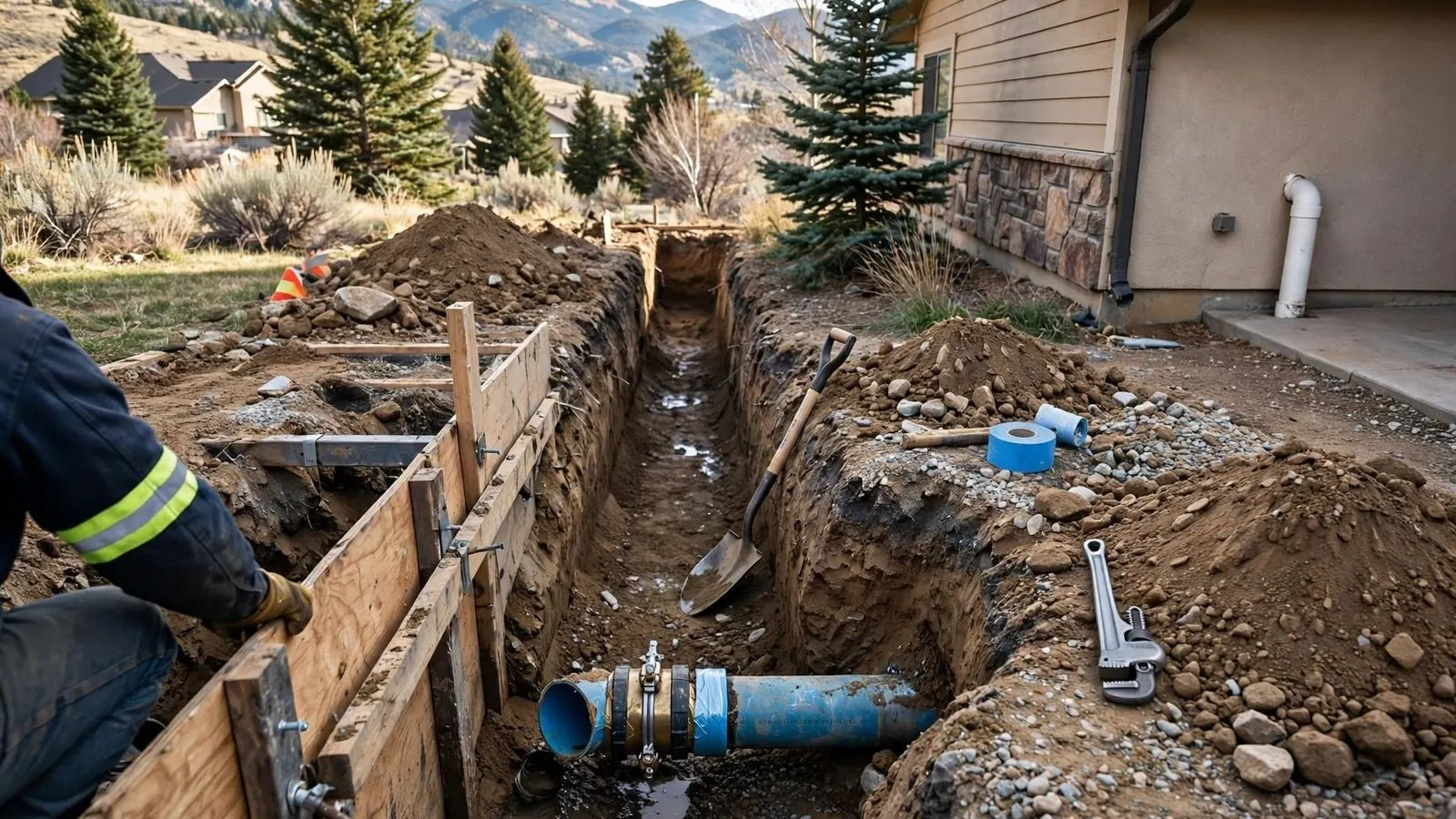
Soggy yard, no pressure, or a meter that spins after the house is shut off?
These are the usual signs that the buried line is failing. Water pools in one low spot on a dry day, pressure falls at every tap together, or the meter keeps moving after the main valve inside is closed.
A water service line repair or replacement fixes the pipe outside, from the meter side to where it enters the house. We confirm that is the real problem before anyone brings in a backhoe.
When a broken water line is an emergency
Call right away if water is surging out of the ground, the line to the house has no flow at all, or a wet patch is spreading toward the foundation or a neighbor's property. Close the house shutoff and keep people and pets off the soft ground.
We take these calls nights, weekends and holidays, and same-day appointments are available when the situation allows. A buried line break can undermine the soil around a driveway or slab, so it is not a problem to leave until Monday.
While you wait
Small steps protect your property and speed the work.
- Close the house shutoffThis stops water from entering the house, though a leak outside the shutoff may keep running until the meter valve is closed.
- Note the meterWrite down the reading and time, and whether it still moves.
- Keep the area clearMove cars, planters and toys off the yard where the line runs, and keep people off soft ground.
- Photograph the wet spotPictures of the location and the meter help with diagnosis and any claim.
- Find your utility billIt shows your water provider and account number if the leak is on the utility side.
Do not dig around the line yourself. Buried gas, electric and other lines can be nearby, and utility marking comes first.
Which side of the meter is yours?
Commonly, the utility maintains the main in the street and the meter, and the property owner maintains the line from there to the house. That split can vary by system and by property, so do not assume. For Huntington Park addresses, ask the City of Huntington Park Water and Sewer Division where your responsibility starts and whether they need to be involved before excavation.
The city's water system has about 6,600 service connections, and its Public Works office can point you to the right contact. Asking before you dig can keep you from paying to repair a pipe that is not yours. If a different provider bills you, check your bill for who to ask.
Low water pressure: the line, or something inside?
Weak pressure has several causes, and only some involve the buried line. These checks help sort them out.
- Every tap is weak at onceThat points to the service line, the meter, the main shutoff or the pressure regulator. One weak tap is more likely a clogged aerator or fixture.
- Pressure dropped suddenlyA sudden loss suggests a leak or a partly closed valve. A gradual fade over years is more typical of corrosion or mineral buildup.
- The meter spins with everything offA moving meter with the house shut off points to a leak on the buried line.
- Pressure regulator troubleA worn pressure reducing valve can drop pressure at the house even when the line is fine. It can be tested and replaced.
- Older steel service pipeGalvanized lines can narrow from the inside with rust and scale and choke the flow.
- A closed or half-open shutoffCheck that the main valve is fully open and the meter valve has not been tampered with.
If hot water pressure is weak but cold is normal, the issue is the heater or interior piping, which are different jobs from this page.
Finding a leak in a buried line
We start with a flow test, closing the house shutoff and watching the meter. If the meter stops, the leak is inside the house, and our leak detection page covers that search. If it keeps running, we move to the yard.
Acoustic ground microphones listen along the path of the line, and tracer gas or a pressure test confirms the leak when sounds are unclear. Plastic pipe, deep lines and traffic noise make listening harder, so we cross-check before marking where to dig.
What drives the price of a water line job
Water line work varies more than most plumbing, so you get a clear price once the route and method are known and before work starts.
For a real number, call the 24/7 line. We locate the problem, describe your options and give a clear price before we start.
Call (213) 672-5590Trench or trenchless: comparing the methods
The choice depends on soil, access, the existing pipe and what is on the surface above it.
| Method | How it works | Best when | Trade-off |
|---|---|---|---|
| Spot repair in a trench | Dig down to the leak and replace a short section | One isolated break in otherwise sound pipe | The rest of the old line is still old and may fail elsewhere |
| Full open trench replacement | Dig the whole route and lay a new pipe | Short run, clear lawn or dirt, badly deteriorated line | Most surface damage, with landscaping or paving to restore |
| Trenchless pipe bursting | A new pipe is pulled through as the old one is split apart | Long run under driveway, patio or landscaping | Needs entry and exit pits, and some conditions rule it out |
| Pull-in new line through old pipe | A new line is drawn through the old path | Sound alignment and suitable pipe size | Smaller final inside diameter and not always an option |
Trenchless methods usually mean less digging, not no digging. We tell you where the pits would go and which method really fits your yard.
Repair the line or replace it?
A single clean break in a line that is otherwise sound is a reasonable spot repair. When the pipe is old galvanized steel or has been fixed before, a second break is likely, and paying for a trench twice costs more than replacing once.
We compare both in plain terms: price now, the chance of another failure and how much of your yard or driveway is affected. New lines are installed in approved pipe and fittings under the California Plumbing Code (UPC based), and permit rules vary, so ask the City of Huntington Park building department before work starts.
How a water line replacement runs
Replacing the line is a planned job even when it begins as an emergency.
- Locate and confirmWe verify the leak or failure and mark the route, and we call for utility marking before digging.
- Choose the methodYou get trench, trenchless and spot repair options with the price and disruption of each.
- Shut off and set upWater is shut off, work areas are protected and entry points are staked out.
- Install the new lineNew pipe is laid or pulled in and connected at the meter side and at the house.
- Add valves and a regulator if neededA new house shutoff and pressure regulator are installed so the next problem is easier to control.
- Test, flush and restoreThe line is pressure tested, flushed, and the trench is backfilled, with surface repair as agreed.
This is not repiping
Water line repair covers the buried pipe outside, between the meter and the house. Repiping replaces the supply pipes inside your walls, ceilings and floors. A house can need one, the other or both, and they are priced and scheduled separately. If your trouble is rusty water or leaks inside, see our repiping page.
Questions homeowners ask
Yes. Our 24/7 line takes water line calls nights, weekends and holidays. We help you close the house shutoff, dispatch a licensed plumber and offer same-day work when available to locate the break and begin the repair.
Low pressure at every tap points to the service line, the meter, the main valve or the pressure regulator. A leak on the buried line, a partly closed valve, or rust inside an older steel pipe are common causes. We test pressure and flow to find which part is responsible.
Usually the property owner is responsible from the meter to the house, and the utility handles the meter and the main. It can vary, so ask the City of Huntington Park Water and Sewer Division before you pay for work, especially if the leak is at or near the meter.
Not always. Trenchless methods use entry and exit pits instead of a long open trench, which can protect a driveway or landscaping. They do not fit every line, so we compare trench and trenchless options for your property before you decide.
Water line repair fixes the buried pipe from the meter to the house. Repiping replaces the pipes inside the house walls. They are separate jobs, and a house can need either or both. See repiping if you have leaks or rusty water inside.
We close the house shutoff and watch the meter. If it still runs, the leak is outside. Then we pinpoint it with acoustic ground microphones, a pressure test or tracer gas, so excavation is limited to the leak location.
Generally the owner or property manager, since the line belongs to the property. Report symptoms in writing right away. About 73 percent of occupied homes in Huntington Park are rented, so this is common, and we can document findings for both sides.
Yes. We serve Huntington Park and nearby towns, including Cudahy, with the same 24/7 emergency line. Which utility serves your address depends on where you live, so check your bill.