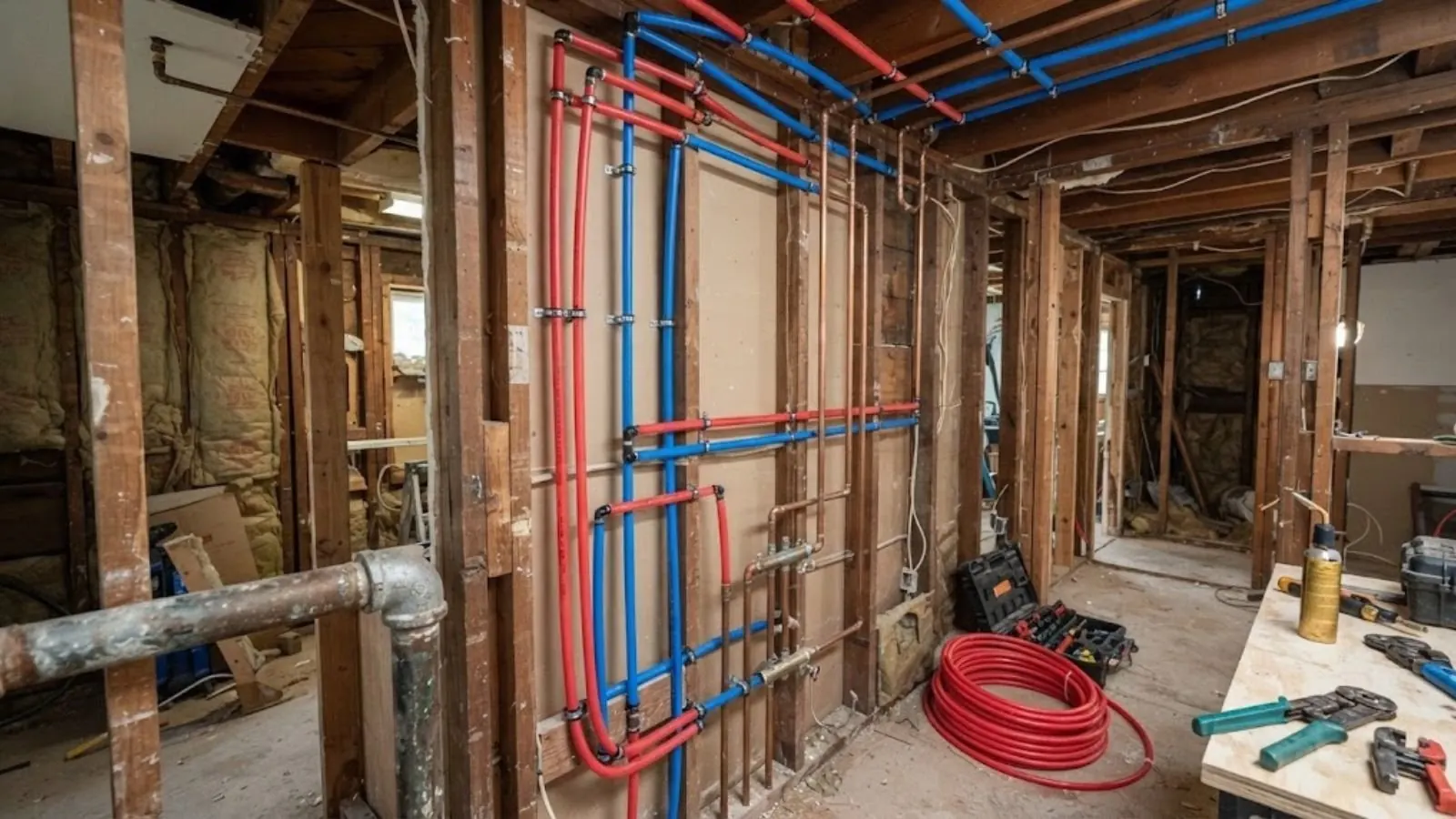
Rusty water, weak pressure and pinhole leaks that keep coming back?
One repair is routine. A third leak in two years, orange water on first use in the morning or a shower that has lost its force suggests the pipe itself is worn out, not one bad joint.
Repiping is the answer when the whole system is the problem, and this page explains how to tell, what the options are and what the work is like in an occupied home.
Signs the pipes inside your walls are at the end of their life
No single sign settles it, but a cluster of them usually does.
- Rusty or brown waterIf it clears after a minute of running, rust from galvanized steel is a likely source. Water that stays discolored in all taps deserves a closer look.
- Falling pressure at several fixturesGalvanized pipe narrows from the inside as scale and rust build up, so flow dies off even though the supply is fine.
- Repeated pinhole leaksEach repair is a hint that nearby pipe is just as thin. Green or blue crusted spots on copper point the same way.
- Visible corrosion at jointsFlaking, bulging or crusty fittings under sinks and at the water heater show where old pipe is failing.
- Gray plastic pipe in the attic or crawlspacePolybutylene was widely installed and later became known for failing at fittings. If you find it, plan for replacement.
- Discolored or metallic-tasting waterMention this to your plumber, and test your tap if you have health concerns. We do not make health claims about water quality.
What is in your walls: galvanized steel, polybutylene or aging copper
Each material fails in its own way, and knowing which you have shapes the decision. A plumber can usually identify it by looking at exposed pipe in a garage, crawlspace, attic or under a sink.
Galvanized steel
Galvanized pipe is zinc-coated steel that rusts from the inside over decades. The inside diameter shrinks, pressure falls and rust shows up in the water. Once flow is clearly reduced, replacement is the realistic fix, because patching one section does not widen the rest.
Polybutylene
Polybutylene is a gray, blue or black flexible plastic once used widely in home supply plumbing. It tends to fail at the fittings, sometimes without warning. Because the failure can be sudden and affect hidden spots, most plumbers recommend replacing it before it leaks.
Aging copper
Copper can last a long time, but not every system lasts equally well. Pinholes, thin walls, green corrosion and leaking joints can appear after decades of use. If leaks are scattered and recurring, replacing the whole system is often smarter than chasing them one at a time.
PEX, new copper or keeping your old copper
Both PEX and copper are accepted under the California Plumbing Code (UPC based) with approved fittings. The best pick depends on your house, budget and priorities.
| Option | Strengths | Drawbacks | Fits when |
|---|---|---|---|
| PEX (cross-linked polyethylene) | Flexible, fewer fittings, less wall opening, often lower labor and material cost | Not for outdoor sun exposure, rodents can chew it and some owners prefer metal | You want a faster job, fewer wall cuts and a good value |
| New copper | Long track record, rigid, handles heat well, solid resale appeal | Higher material cost, more labor, more soldered or press joints | You want a traditional metal system and can budget for it |
| Keep and spot-repair aging copper | Lowest upfront cost, no wall disruption | More leaks may follow and each one costs money and causes damage | Pipe is mostly sound and failures are isolated |
We explain which pipe types suit each part of your house, and sometimes a mix is the best answer. If your trouble is a single burst, see burst pipe repair instead.
What a repipe day involves
Whole-house repiping runs best when you know the sequence.
- Walkthrough and planWe look at every fixture, choose pipe routes and decide where wall and ceiling openings will go, so cuts stay small and logical.
- Protect the homeFloors, furniture and doorways are covered, and dust barriers go up where drywall will be cut.
- Shut off water and open accessThe water is shut off at the main and small openings are cut at fixtures, studs and in attics or crawlspaces.
- Run the new linesNew hot and cold supply lines are installed to each sink, toilet, shower, appliance and the water heater.
- Connect, test and restore waterEach line is pressure tested before the old pipe is disconnected and water is turned back on. Fixtures are reconnected and checked for leaks.
- Patch and clean upOpenings are closed with drywall patches. Texture, paint and finishing are separate trades unless agreed in advance.
What affects the cost of repiping
Because every house is different, we give a clear price after seeing the home and before work starts.
For your real number, call our line and tell us about your house. We schedule same-day appointments when available and explain the options plainly.
Call (213) 672-5590Wall patching and how long the work disrupts your home
Repiping opens more of your house than most plumbing jobs, but it is not a demolition. PEX needs fewer and smaller openings than rigid copper because it bends around corners and can be fished through walls. Many access holes sit behind fixtures or in closets and attics.
A typical whole-house repipe is measured in days, not weeks, and the water is off for part of each day. You can usually stay home, with temporary arrangements for showers and cooking during the shutoff window. Larger or multi-story homes, finished tile walls and apartments with several units take longer.
Repipe now, or keep patching?
Add up what the last few repairs cost, the damage they caused and how many more thin spots are likely. If you have galvanized steel with falling pressure, polybutylene, or three or more leaks in the same pipe system, repiping usually wins on cost and stress.
If the pipe is mostly sound and the failures are isolated, a targeted repair can be the honest answer. We tell you plainly when a repipe is not needed. Weak pressure can also come from the buried line, so our water line repair page is worth a read first.
What to check before you call
A little information makes the quote faster and more accurate.
- Identify the pipeLook in the garage, under sinks and in the attic for gray, silver, copper or white plastic pipe, and take photos.
- Count your fixturesList bathrooms, kitchens, laundry and outdoor connections.
- Note your symptomsWrite down where pressure is low, where rust shows and where leaks have happened.
- Collect past repair recordsBills and photos show a pattern and help the plumber see what has been fixed.
- Plan your household scheduleThink about when the water can be off, and arrange for pets, kids and valuables.
If a pipe is actively leaking now, shut off the main valve and call the 24/7 line.
Remodels and new construction
Plumbing a new home, addition or gut remodel is different, because walls are open and layout can be planned from scratch. We work from plans, size the supply lines, place shutoff valves and manifolds if wanted, and coordinate with other trades.
Permit rules vary, so ask the City of Huntington Park building department before work starts. New plumbing and a whole-house repipe are the kind of work they may want to review.
Repiping is not water line replacement
Repiping replaces pipes inside the house. Water line repair replaces the buried service line from the meter to the house. A home can have one old, one new, or both old. Hard water is also worth considering, since Huntington Park supply measures very hard and scale builds up in fixtures and heaters. Test your tap and ask about a softener if scale is a problem.
Questions homeowners ask
Repeated leaks, rusty water, falling pressure at several fixtures and visible corrosion are the main signs. Galvanized steel and polybutylene are also reasons to plan replacement even before leaks start. A plumber can inspect exposed pipe and test pressure to say whether patching or a repipe makes sense.
If every fixture is weak, check the pressure regulator, the main shutoff and the buried line. If the house has old galvanized pipe, rust and scale narrow the inside, which cuts flow. We test pressure first, then tell you which part of the system is responsible.
Neither is best in every case. PEX is flexible and usually costs less and needs fewer wall openings. Copper is rigid, long proven and favored by some owners, but costs more. We explain which suits your layout and sometimes mix them. Both are accepted under the California Plumbing Code with approved fittings.
Water is typically off for part of each working day, not continuously for the whole job, and we coordinate the timing with you. The total job is usually measured in days, and size, access and the number of bathrooms change that. We give you a plan before starting.
It opens some walls, ceilings or floors, but not all of them. PEX needs fewer and smaller openings than copper. We plan cuts at closets, fixtures and attics where possible and patch them. Painting and texture matching may be separate, so ask what is included.
No. Repiping replaces the pipes inside your house. Water line replacement is the buried line from the meter to the house. Some homes need both. For the outdoor line, see our water line repair page.
The owner or property manager decides and pays for repiping, since it is a building improvement. About 73 percent of occupied homes in Huntington Park are rented, so tenants often start by reporting leaks and rust in writing. We can inspect and give the owner a written explanation of the options.
Yes. We serve Huntington Park and nearby towns, including South Gate. The 24/7 line is for urgent leaks, and a repipe is usually booked ahead, though same-day appointments are available when possible.