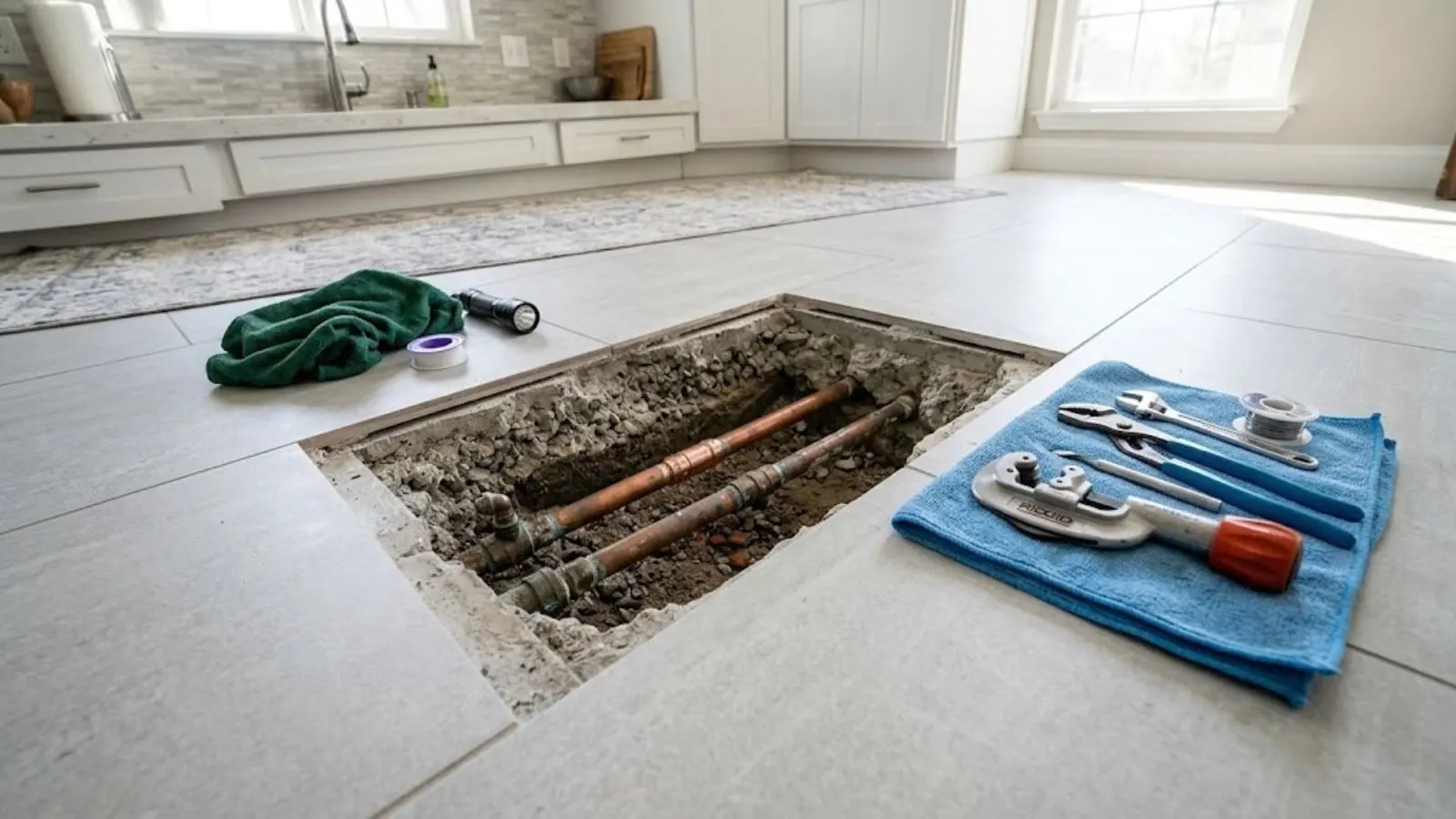
A warm spot on the floor, or the sound of water with every tap off?
Those two signs point to a pressurized pipe leaking under the floor, and hot water lines are the usual suspects because they heat the concrete above them. If the floor feels warm in one patch while the heater is off, or you hear a faint hiss or trickle in a silent house, a slab leak is a strong possibility.
Slab leak repair is the work of confirming that the leak is below the foundation and fixing it with the least cutting the pipe condition allows.
When a slab leak is an emergency
Treat it as urgent when water is rising under flooring, the meter is racing with all fixtures off, or a warm wet patch is spreading. Close the main shutoff, turn off the water heater if hot water is involved, and call. Our line works nights, weekends and holidays, and same-day appointments are available when the day allows.
A leak that has run for days can lift laminate, stain baseboards and leave damp subfloor behind. Fast shutoff is what keeps a plumbing repair from becoming a flooring replacement.
While you wait for the plumber
A few minutes of prep limits damage and speeds the repair.
- Shut off the mainTurn the main valve clockwise. If hot water is the problem, turn off the water heater too.
- Lift what you canMove rugs, boxes and furniture off wet flooring. Open windows for air.
- Keep power away from waterDo not use outlets or appliances on wet floors. Call 911 if water reaches the panel.
- Mark the warm spotUse painter's tape to outline the warm or wet patch so we start in the right area.
- Photograph and write it downTake photos, note the meter reading and time, and list the signs you noticed.
Please do not drill or break the floor yourself, because it can hit other lines or make the leak harder to find. Reroutes and repairs under or through a slab follow the California Plumbing Code (UPC based), and the building department can tell you whether your address needs a permit.
Signs the leak is under the concrete
No single sign proves a slab leak, but several together rarely mislead.
- A warm or hot spot on the floorWalk barefoot over tile or concrete. A patch that stays warm with the heater idle suggests a hot line leak beneath it.
- Running water soundTurn every tap and appliance off, then listen at the floor. A hiss, rush or trickle means pressurized water is escaping.
- Water under floorboards or baseboardsLifting tile grout lines, buckling planks, damp carpet edges and a musty smell can all trace to the same spot.
- Water at the garage slab edgeDampness along the garage floor seam or a darker stripe at the slab edge can show the leak migrating to where the concrete ends.
- Meter movement or a higher billIf the meter dial turns with everything off and the house shutoff stops it, the leak is inside, not in the yard.
- Weak hot water pressureA hot line leak can lower flow at the tap, even when the heater itself works normally.
If your main concern is simply a high bill with no visible damage, start with our leak detection page. This page is for leaks already traced under the slab.
Four ways to fix a slab leak, with honest trade-offs
There is no single best method. The right one depends on pipe material, how many leaks there are, and how much of the house you are willing to open.
| Repair method | What it involves | Best when | Trade-off |
|---|---|---|---|
| Spot repair (tunnel or break-through) | Opens the floor or digs under the slab at the leak and replaces that section | One leak in otherwise sound pipe | Floor cut, dust and patch, and more leaks may follow in old pipe |
| Reroute (overhead or wall routing) | Abandons the slab line and runs new pipe through walls or attic | Leak in hard-to-reach or multiple spots | More wall and ceiling openings, but avoids repeated slab breaks |
| Epoxy pipe lining | Cleans the pipe and coats it from inside with a hardened liner | Pipe is structurally sound with pinholes | Not for badly corroded or collapsed pipe and fittings still need access |
| Repipe | Replaces the whole water system with new pipe | Pipe is old and failing in many places | Highest cost and disruption, longest lasting result |
We explain which of these your pipe actually allows before you commit. If you suspect your whole system is aging, compare with whole-house repiping.
Spot repair or reroute: how the decision gets made
Spot repair is the cheapest in the short term and usually quickest. It makes sense when the leak is a single failure in pipe that is otherwise fine, and when the floor can be opened and patched without damaging finished surfaces.
Rerouting becomes the better choice when the slab line is near a bearing wall, runs under cabinets or tile you want to keep, or has failed more than once. We run a new line through the walls or attic, cap the old pipe and avoid breaking concrete again.
Ask for the price of both options side by side. A plumber should be able to say why one makes sense for your layout, not push whichever job is bigger.
What shapes the cost of slab leak repair
Every slab is different, so we give a clear price once the leak is located and the method is chosen, before work starts.
Call the 24/7 line for your real number and a plain explanation of which fix fits your pipe.
Call (213) 672-5590Epoxy pipe lining: when it fits and when it does not
Pipe lining coats the inside of a leaking pipe with epoxy, which can seal pinholes without cutting the floor along the whole run. The lines are drained, cleaned and dried, then the epoxy is pushed through and cured. It suits copper in decent shape with small leaks.
It is not a rescue for pipe that is badly corroded, split or fitted with failing connections. In those cases the liner may hold poorly or the leak simply moves. We check the pipe condition first and tell you plainly if lining will not be a lasting fix.
How a slab leak job runs
Each step lets you see progress and approve what comes next.
- Confirm the leak is below the slabMeter flow test, pressure test and listening equipment separate slab leaks from wall or yard leaks.
- Pinpoint the spotAcoustic equipment and, when needed, tracer gas or thermal imaging mark the leak on the floor within a small area.
- Choose the repairWe lay out spot repair, reroute, lining and repipe, with price and disruption for each.
- Protect the homeFurniture is moved, dust barriers go up and the water is shut off at the main or at isolation valves.
- Repair and testThe pipe is fixed or replaced, then pressure tested before anything is closed up.
- Patch and finishConcrete or walls are patched. Finish flooring and paint usually belong to a flooring or painting trade.
Before you approve a slab job
Ask where the leak was located, how it was confirmed and why this method was chosen. Permit rules vary, so ask the City of Huntington Park building department before work that opens the slab or reroutes lines. In a rental, report the problem in writing at once and let the owner approve the work.
Why slab leaks in this area deserve a second look
Huntington Park is dense and nearly built out, so homes sit close together and many were built on concrete slabs. A slab leak near a shared wall or property line can reach a neighbor, which makes early documentation useful. Local water is a mix of deep groundwater and imported supply and measures very hard, so scale inside older pipes is common.
That does not mean hard water caused your leak, and we do not make that claim. It does mean aging pipe and heavy mineral buildup are worth weighing when you choose between a patch and a longer-term fix.
Questions homeowners ask
Yes. Our 24/7 line takes slab leak calls nights, weekends and holidays. We help you shut off the water, send a licensed plumber and, when available, schedule same-day work to locate the leak and start the repair.
A warm patch with the water heater idle, a running water sound at the floor and a spinning meter together make a slab leak likely. Radiant floors or sun through a window can also warm floors, so testing is needed. We confirm with pressure and listening equipment before opening anything.
Not always. Rerouting runs new pipe through walls or attic and pipe lining works from the pipe's ends, and both can avoid cutting the slab. Spot repair does open the floor at the leak. We tell you which options your pipe allows and what each disrupts.
It can last a long time in sound pipe with pinholes, but it is not a cure for badly corroded or split pipe. We inspect the pipe first and say honestly whether lining will hold. If it will not, rerouting or a repipe is the better path.
Not necessarily. One leak in good pipe can be a spot repair. Several leaks, repeat failures or pipe that is visibly corroded suggest a larger fix. Ask for the pipe condition findings, and see our page on repiping if replacement is on the table.
It might be. Water at the garage slab edge can come from a line under the slab, but also from irrigation, a hose bib or outside drainage. A meter test and listening check separate the causes. If you are unsure, shut off the main and call.
Around 73 percent of occupied homes in Huntington Park are rented, so this comes up often. The tenant should report the leak in writing right away, and the owner or property manager should authorize the repair. We can document findings for both.
Yes. We serve Huntington Park and nearby towns, including South Gate and Maywood. The same 24/7 line covers slab leaks there, with a licensed plumber arriving prepared to confirm the leak.