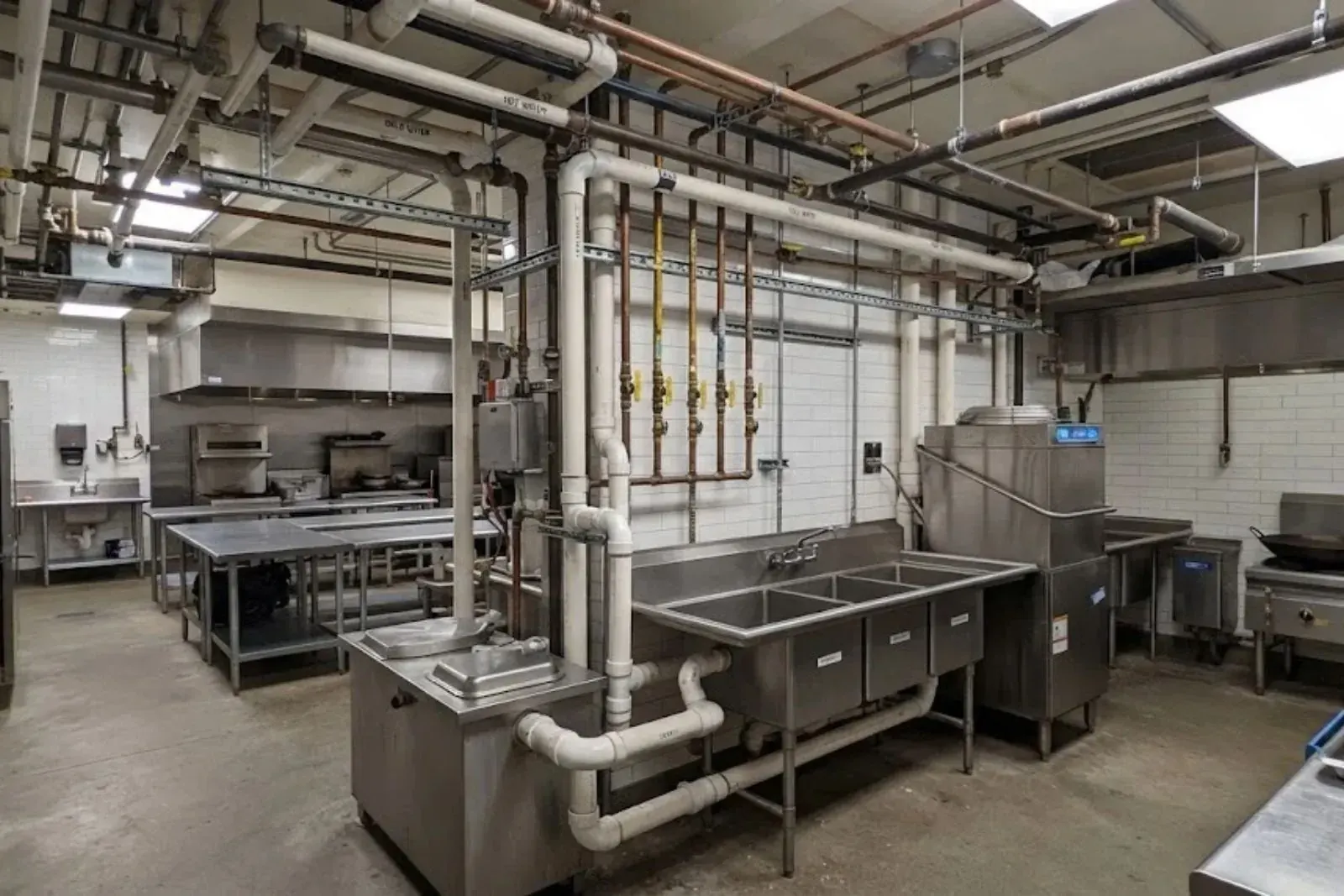
When a storefront leak or backup is an emergency
The Pacific Boulevard shop corridor runs with a lot of tenants in a small area, and many buildings share walls, roofs and drain lines. That means a leak in one shop often shows up in another, and a restroom backup can reach a neighbor's floor. A burst supply line, sewage coming up through a floor drain or a flooded sales floor needs a plumber the same day, not next week.
Water that is clean and contained, like a slow drip under a sink, can wait for a scheduled visit. Sewage and active spraying cannot.
Property managers, landlords and tenants: who calls whom
Nearly three quarters of occupied homes in Huntington Park are rented, and many commercial buildings follow the same split: an owner, a manager and tenants who do not control the pipes. In a mixed-use building with shops below and apartments above, a single leak can cross all three. Decide before an emergency who has authority to approve a repair after hours.
We give the manager and the tenant the same plain description of the cause and the work. We do not claim insurance partnerships, and we recommend you photograph damage and contact your carrier yourself.
What to do while you wait for the plumber
A few steps protect the building and speed up the visit.
- Shut the closest valveThen the main water shutoff if the leak continues.
- Protect stock and electronicsMove goods off the floor and away from the leak, and turn off power to wet equipment.
- Keep people clearSewage and standing water are slip and health hazards. Block off the area.
- Photograph the damageTake pictures and video for the manager and the insurance carrier.
- Notify the managerTell the owner or manager the same hour, and neighboring tenants if the leak is shared.
Do not mix chemicals or pour cleaner into a backed-up drain. It can make the work unsafe for everyone. Commercial work follows the California Plumbing Code (UPC based), and backflow and grease interceptor requirements are set by the local authority, so confirm those with the City.
Common commercial problems and the first response
Most after-hours calls fall into a few patterns. Here is what each one means and what to do before we arrive.
| Problem | Likely cause | First response | Related service |
|---|---|---|---|
| Floor drain backing up | Main or lateral line blockage, grease or roots | Stop using restrooms and sinks, keep staff away from the water | Sewer line cleaning |
| Ceiling stain or drip after hours | Supply line, roof drain or the unit above | Shut the local valve, protect stock, photograph | Leak detection below |
| Water meter spinning while closed | Hidden line leak or running fixture | Close fixtures, then the main, and note the meter | Water line repair |
| Restroom overflow | Toilet, branch line or main clog | Close the toilet stop, stop flushing | Drain cleaning |
| Kitchen drain slow or foul | Grease buildup or a full interceptor | Stop discharging grease, avoid chemicals | Grease trap section below |
Commercial leak detection: what it can and cannot find
A shop that loses water at night or sees a steady bill increase needs a methodical search. We start with a meter test, then use acoustic listening equipment, thermal imaging and pressure testing to narrow the source before anyone cuts into a wall or slab.
Detection is not magic. Some leaks are hard to hear, and some are found only when the line is isolated and tested in sections. We tell you what the tools show and what they do not, and we do not open walls until the evidence points to a place. For larger or hidden leaks, see our page on leak detection.
Backflow testing: a planned job
Backflow preventers keep water in a building from flowing back into the public supply. Commercial buildings with irrigation, fire lines, boilers or certain restaurant equipment often have testable assemblies, such as a reduced pressure zone device or a double check valve. Many water suppliers require periodic testing.
Rules on who may test, how often and what forms apply come from the water supplier and the county or state. Ask the City Water & Sewer Division what your account needs, and confirm the tester's qualifications yourself before booking. If you are not sure whether your building has an assembly, a plumber can identify it on a walk-through.
What decides the price of commercial plumbing work
No two buildings are alike, so a single number would mislead you. These factors move the price.
Want your real number? Call the 24/7 line, tell us what the building is doing, and we will give a clear price before work starts.
Call (213) 672-5590Grease trap and interceptor cleaning
Restaurants, bakeries and food counters send fats, oils and grease down the drain, and an interceptor catches most of it before it hits the sewer. When the trap fills, grease passes through and solidifies downstream, and the kitchen drain slows and smells. A full trap should be pumped on a schedule rather than after a backup.
If a kitchen line backs up repeatedly after the trap is serviced, the line itself may need to be scoured with a hydro jetting nozzle. We recommend a camera look before assuming the trap is the whole problem.
Storm drain cleaning
Parking lots, loading areas and rooftop drains collect leaves, trash and silt, and a clogged catch basin sends water into doorways instead of the street. This is a planned maintenance job, best done before a storm season. Property managers should include roof drains and yard drains on a regular schedule and note which drains connect to the city storm system versus the sanitary sewer. If you are not sure, ask the city before flushing anything.
What to have ready when you call about a commercial job
- Building address and unitInclude the nearest cross street, such as Pacific Boulevard, Slauson Avenue, Florence Avenue or Santa Fe Avenue.
- Who is authorizedName the owner, manager or tenant who can approve work and payment.
- Where the shutoffs areMain water, local valves and the sewer cleanout, if you know them.
- What changedNew equipment, tenant change, recent construction or a recent storm.
- Hours and accessAlarm codes, key holders and loading access after hours.
Business hours versus after hours
Whenever the situation allows, we schedule commercial work for the least disruptive hours, including early mornings and nights. When water or sewage is already spreading, the 24/7 line is the right call, and we offer same-day appointments when available for repairs that can wait a few hours. Say so on the phone so we can plan the visit.
Questions homeowners ask
Yes. Our 24/7 emergency line covers storefront leaks, restroom backups and floor drain overflows after hours. We offer same-day appointments when available and give a clear price before work starts. Close the local valve or main and tell us who can authorize the work.
Yes. We speak with owners, managers and tenants, explain the cause and the work in plain language and put the details in writing afterward. We do not claim partnerships with insurance companies, so claims go through your own carrier.
Yes, using meter tests, acoustic listening, thermal imaging and pressure testing. Some leaks are hard to hear or sit hidden in a slab, and we say plainly what the tools show before anyone opens a wall. Many shops start with a simple meter test after closing.
Backflow testing checks the valves that keep building water from flowing back into the public supply. Buildings with irrigation, fire lines or certain equipment often need it. Ask the City Water & Sewer Division what your account requires.
It depends on kitchen volume and trap size, so there is no single schedule. Many are cleaned monthly, others quarterly. Check your local rules, and if the kitchen drain smells or runs slowly, the trap is probably overdue.
Yes, as a planned maintenance job. We clear catch basins and roof drains with cables and jets, and we advise you to check which drains connect to the city storm system before flushing anything.
Yes. We serve Huntington Park and nearby communities such as South Gate. Call the 24/7 line with the address and we will tell you what we can schedule.