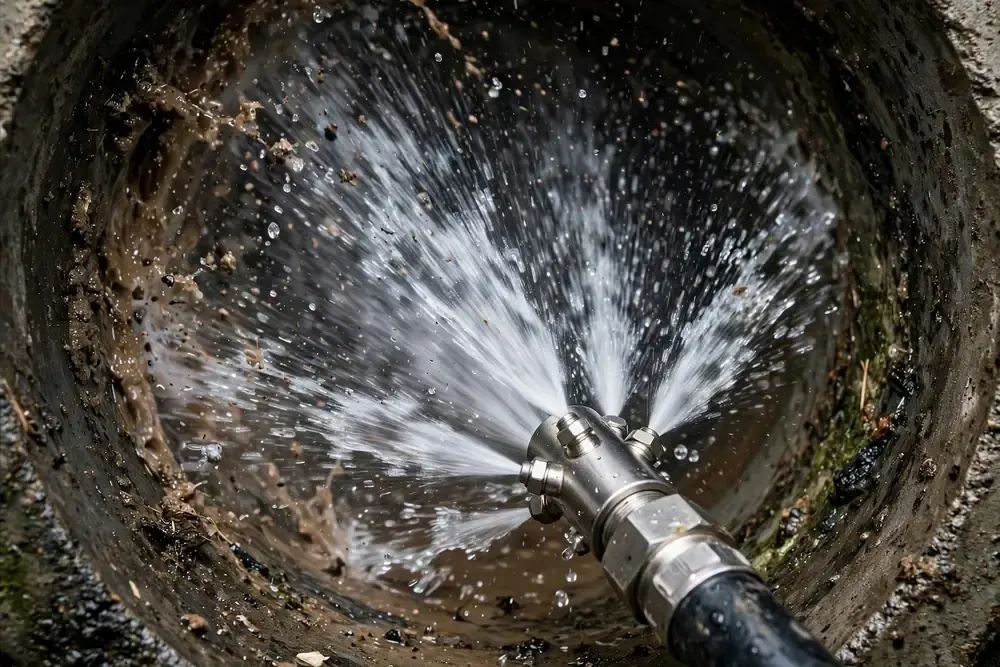
Snake got stuck, or the clog keeps coming back every few weeks?
That pattern is the most common reason people end up needing a hydro jet. A cable punches a hole through the blockage, the drain runs for a while, then the narrowed pipe catches new debris and stops again.
The fix for that cycle is hydro jetting, which cleans the whole inside wall instead of one hole. It is also the standard answer when a snake hit something and stopped, because a jet can wash past a snag that a cable cannot.
How a hydro jet works inside the pipe
A hydro jetter is a pump and a spool of high-pressure hose. The nozzle at the end fires jets forward to break up the blockage and backward to push the hose along while scouring the walls, then the loosened material flows out with the water.
Nozzle choice matters
A penetrating nozzle drills through a hard plug. A spinning, wide-fan nozzle scrapes grease and scale from the pipe wall. A chain or root-cutting head handles roots. We pick the nozzle after looking at the camera feed, not before.
Pressure is set to the pipe
Residential lines are cleaned at a much lower setting than a commercial storm line. Old cast iron, clay or Orangeburg pipe is treated carefully, and a line that looks fragile on camera is not jetted at all until it is assessed.
Water volume does the work
Pressure breaks the blockage but volume flushes it out. A good jet delivers a steady flow that carries debris downstream to the main instead of leaving it to settle in the next bend.
What to do while you wait for the jetter
A little preparation helps the crew get to the cleanout quickly and keeps the damage down.
- Stop all water useNo flushing, laundry or dishwasher. Every gallon goes into a line that is already full.
- Clear the cleanout areaMove planters, bins and cars from the cleanout cap so the hose can be run straight.
- Cover floors near drainsSpread towels around the lowest fixture in case water rises during the jet.
- Write down the patternNote when the line backed up before and how long the last clear lasted. It tells us whether roots or grease is more likely.
If any past plumber told you the pipe was damaged, mention it. We will camera the line before using high pressure. Jetting a line does not change what the California Plumbing Code (UPC based) requires of the pipe, so we check cleanouts and slope on the camera before we blast.
Hydro jetting versus snaking, side by side
Neither method is better in every case. The right pick depends on what is in the pipe and how often it clogs.
| Situation | Snake or cable | Hydro jet |
|---|---|---|
| First-time sink clog | Usually enough | Not needed |
| Clog returns within weeks | Opens a channel only | Cleans the whole wall |
| Heavy grease from a kitchen line | Leaves a coating | Strips the coating |
| Fine tree root hair in a clay line | Cuts the center | Cuts and flushes with a root head |
| Cable jammed or turned back | Often cannot pass | Can wash past the snag |
| Collapsed or offset pipe | Stops at the break | Not suitable, repair first |
If a plain single-fixture clog is all you have, our drain cleaning service is the faster and cheaper starting point.
Sewage rising or no drain moving: when jetting is the emergency fix
A main line that is fully stopped is an overnight problem. Toilets will not flush, tubs fill with gray water, and the lowest drain in the house may begin to overflow.
After-hours calls get a camera look at the line first if possible, then a jet with a nozzle matched to the blockage. We can often restore flow the same night, though a severely collapsed or root-packed line may need a repair visit instead.
Tell the dispatcher if sewage has reached carpet or drywall, so we send the right protective gear.
Roots, grease and scale: what jetting removes
The three most common reasons we jet a line each leave a different clue.
- RootsSlow drains that return seasonally, often with gurgling toilets. Fine roots enter at joints and trap paper.
- GreaseKitchen lines that smell sour and clog every month or two. Fat builds into a thick lining over time.
- Mineral scaleHuntington Park groundwater averages 214 mg/L total hardness, which the USGS scale rates very hard, so older drains and water-heater drain lines can collect scale.
- Sludge and soapLaundry and bath lines that run slower each year because soap and lint cling to rough walls.
- Construction debrisA line that never ran well after a remodel may hold grout, sand or a lost rag.
Hard water does not cause roots or grease, but it does make the pipe wall rougher, which gives both something to grip.
What drives the price of a hydro jetting job
A jet is a larger machine and a longer visit than a snake, so the price reflects the work. These factors decide the number.
Want your real number? Call the line, tell us what has been happening, and we will give you a clear price before work starts.
Call (213) 672-5590When we will not jet a line
Hydro jetting is not a universal answer. A broken, bellied or collapsed pipe can be flushed open and then fail again within days, and a jet can force water out of a cracked joint into the soil.
That is why we recommend a sewer camera inspection before and after. If the footage shows a structural problem, we will say so and quote a sewer line repair instead of selling a jet that cannot hold.
What a jetting visit looks like
Here is the order we follow on most residential visits.
- Locate the cleanoutWe find the main cleanout, or pull a toilet if there is none, so the hose enters the line straight.
- Look firstA camera run shows the blockage type, pipe material and any damage.
- Pick the nozzle and set pressureWe match the head and setting to what the camera showed.
- Jet upstream and downstreamThe hose works from the cleanout outward, then back in again to flush loosened debris.
- Confirm with the cameraA second pass verifies the pipe is clear and shows any damage that was hidden.
Planning a maintenance jet
Restaurants and multi-unit buildings often schedule jetting once or twice a year because their lines carry more grease and more households. A single-family home with a recurring problem might need it every few years, depending on what the camera shows.
If your property is a rental with a shared lateral, ask your landlord whether a maintenance jet is already on the schedule. Owners just east of us can use the same line through our Bell plumbing service.
Questions homeowners ask
Yes. Our 24/7 emergency line covers stopped main lines overnight, on weekends and on holidays, and we offer same-day appointments when available. A licensed plumber gives you a clear price before work starts, and a camera check comes first when the line allows it.
Stop using the drain and call. A jammed cable can mean a root mass, a broken joint or a foreign object. We camera the line, retrieve the cable if needed, and decide whether a jet is safe.
A clean jet can last years in a pipe that is otherwise sound, since it removes the buildup that new debris clings to. Roots will grow back unless the entry point is repaired. Your camera footage shows which case applies.
On sound modern pipe, no. On old, cracked or collapsed pipe it can make a weakness worse, which is why we look with a camera first and choose low pressure for fragile lines. We will tell you if jetting is a bad idea.
Yes for most stubborn clogs. Chemicals sit in standing water and rarely reach the full pipe wall, and they can be hazardous to handle. A jet physically removes the buildup and is safer for the plumber.
Yes. Grease-heavy kitchen lines and shared building laterals are common jetting jobs. Tell us how often the line has been backing up, and ask about our drain cleaning team for a first-step clear.
We strongly recommend one. It shows what is in the pipe, protects against jetting a damaged line, and gives you proof of the result. Skipping it saves time but removes the safety check.