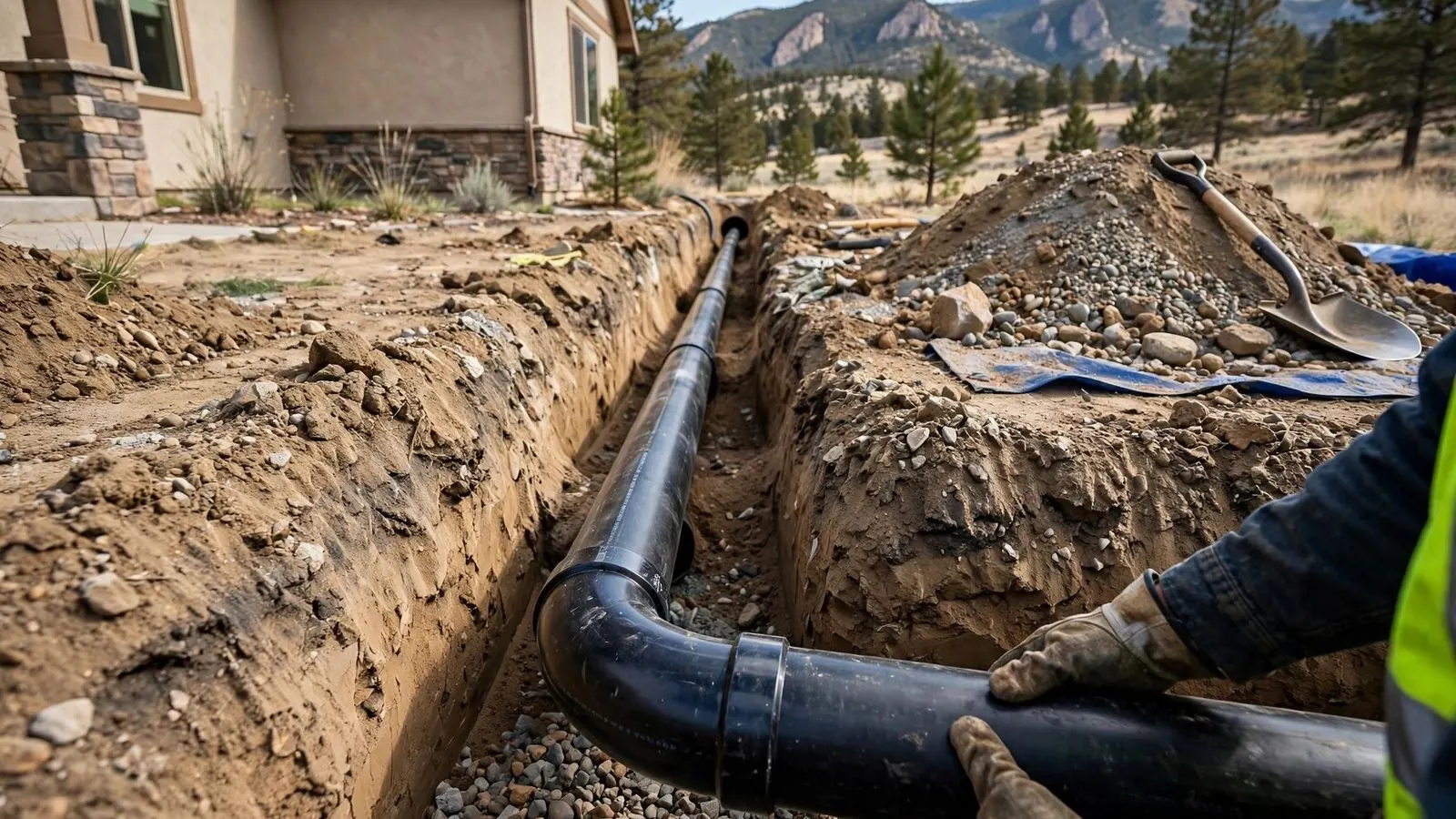
Signs the damage is in the sewer line, not the drain
A clogged drain and a damaged sewer line look alike at first. These clues separate them.
- Repeated backups after cleaningA line cleared three times in a year that stops again is telling you the pipe itself is the problem.
- Several fixtures gurgling or slow togetherA single bad branch affects one bathroom. A damaged main affects everything downstream.
- Sewage smell in the yard or garageCracks release gas and liquid into the soil, and the odor shows up before water does.
- A sunken or soggy patch of groundWater leaving a broken line saturates the soil and can pull dirt into the pipe, creating a low spot.
- Cable that stops at the same spotIf the cable keeps hitting a hard stop at the same distance, the pipe may be broken or offset there.
A camera run is the only reliable way to confirm. Our sewer camera inspection shows the break, its depth and the pipe material, so the repair quote is based on pictures and not guesses.
Sewage coming up in the house: treat it as an emergency
Raw wastewater on floors is a cleanup problem and a safety problem. If a tub or toilet is overflowing, stop flushing, do not run any water, and call the 24/7 line right away.
A night or weekend visit starts with stopping the backup, usually with a main line cleaning, then a camera run to see whether damage caused it. We can often make the line usable the same day and schedule the actual repair for a normal workday, when permits and locates are easier to arrange.
If sewage has soaked drywall or carpet, call your insurance carrier early. A sewer backup endorsement, where you have one, may cover cleanup.
What to do while you wait for the plumber
These steps limit damage and speed up the first visit.
- Stop all waterNo flushing, dishwasher or laundry. Every gallon sent down goes back out through your lowest drain.
- Keep the area clearMove people and pets away from affected rooms and wear gloves if you must touch wet material.
- Find your cleanoutWe use the main cleanout to start the camera, so clear plants and objects from around it.
- Tell your landlordIf you rent, notify the owner or property manager right away, since the lateral is often their responsibility.
If the water is near electrical outlets, turn off the breaker for that area before you step in, and tell the dispatcher. Sewer repairs are built to the California Plumbing Code (UPC based), which sets slope and material rules, and permit needs are a question for the City of Huntington Park building department.
Spot repair, lining or full replacement: how to choose
The camera footage decides the method. This table is how we frame the decision for homeowners.
| Option | Fits when | Trade-offs |
|---|---|---|
| Spot repair (dig and patch) | One cracked, offset or root-invaded section, rest of pipe sound | Cheapest on a short break, but a dig is still needed at that point |
| Cured-in-place pipe lining | Long run with cracks or root entry, pipe still round and in line | No trench, slight loss of diameter, cannot fix a collapse or a belly |
| Pipe bursting | Failed old pipe, new full-size line wanted, space at both ends | Replaces the whole run with new pipe, needs entry and exit pits |
| Open trench replacement | Collapsed, bellied or crushed pipe, or fittings that must move | Most disruptive to yard and driveway, but the most certain result |
Ask for the quote in writing, with the footage timestamp for the problem section, so you can compare it fairly.
Trenchless methods, in plain words
Trenchless means repairing the pipe through small access holes instead of digging up the whole line. It can protect landscaping, a driveway or a patio, which matters on small lots where the sewer lateral runs under a slab.
Cured-in-place pipe lining
A felt tube soaked in epoxy resin is pulled through the pipe, inflated, and cured with steam, hot water or UV light. It hardens into a new pipe inside the old one and seals cracks and joints.
Pipe bursting
A cone-shaped head is pulled through the old pipe, cracking it outward while drawing a new plastic pipe behind it. This is chosen when the old line has failed and you want a full-diameter replacement.
What trenchless cannot do
A liner follows the shape of the pipe, so a belly that holds water will still hold water after lining. A line that is collapsed, or crushed, must be dug. The camera tells us which case you have.
Old cast iron sewer pipe: why it fails and what to do
Cast iron was the standard for decades in older homes, and it can last a long time. It rusts from the inside, forming rough scale that traps paper and grease, and it can crack, flake or separate at the hubs.
The city's own housing element calls Huntington Park nearly built out and one of the densest in the country, with a streetcar-suburb past. If your house is old and its original cast iron has never been scanned, a camera inspection before a problem appears is a sensible step.
When cast iron is found to be scaled but intact, lining it is often possible. When it is split along the bottom or its joints are open, replacement with ABS or PVC is more dependable. We also point out cast iron sections buried under slabs, because they are the hardest and most expensive to reach.
What shapes a sewer repair quote
No two sewer repairs cost the same. These are the five factors that move the figure.
Want your real number? Call the line, tell us what the camera or your symptoms show, and we will give you a clear price before work starts.
Call (213) 672-5590City sewer main or your private lateral?
Your private sewer lateral runs from the house toward the street. Where public responsibility begins and ends is set by the city, not by the plumber. Ask the City Water & Sewer Division, which serves Huntington Park, where your property line responsibility ends before any digging in the street or sidewalk.
If the camera shows the blockage or break beyond that point, the city, or its contract operator, will need to handle it, and we will give you the footage and distance to share. Permit rules vary, so ask the City of Huntington Park building department before work starts.
Septic systems are uncommon in a dense city of this kind, but we do not assume. If you are unsure whether your property is on sewer, the same city division can tell you.
How a repair job moves from call to finished line
The sequence below is typical, though the order changes with the problem.
- Stop the backupWe clear the line enough to stop the overflow so the home is safe to use.
- Camera and locateA camera with a locator transmitter marks the break's depth and position above ground.
- Compare repair optionsWe explain the choices in your table, with the footage, and give a clear price before work starts.
- Permits and utility markingPermit rules vary, so we check with the building department, and underground utilities get marked before any digging.
- Repair, test and restoreAfter the work we run water and the camera through the new section, then restore the dig area.
Mistakes we see before a repair
The most common is paying for repeated snaking when the pipe is broken. Each visit clears the symptom and delays the fix, and meanwhile soil washes in around the break.
The second is planting or paving over the line. Roots follow moisture to a joint, so a repair is only as good as the area around it. If trees are close to the line, ask about a follow-up sewer line cleaning schedule or a hydro jet after the repair.
Questions homeowners ask
Yes. Our 24/7 emergency line takes sewage backups at night, on weekends and on holidays, and we offer same-day appointments when available. After-hours visits focus on stopping the backup and finding the break, with the full repair scheduled once the footage is reviewed.
The portion on your property is usually yours, and the city handles its main in the street. The exact boundary is set locally, so ask the City Water & Sewer Division where public responsibility ends for your address.
For a pipe that is cracked but still round and in line, lining is a durable, less disruptive repair. For a collapsed, crushed or bellied pipe, it will not work and a dig is needed. The camera decides, not preference.
A spot repair or a short liner can be finished in a day. Full replacements, permits and restoration take longer. We give you a written scope and sequence before any work starts, and we do not promise a fixed arrival time.
Permit rules vary, so ask the City of Huntington Park building department before work starts. We can describe the work in the terms they need, and we mark utilities before any digging.
Roots usually enter through an existing joint or crack, then grow and widen the opening. A camera shows where they came in. Removing roots without repairing the entry point leads to repeat backups.
That depends on the lease, the location of the failure, and local rules. We document the cause with footage so you and your tenant can see what failed and where it sits relative to the property line.
We serve Huntington Park and nearby towns. See our Maywood plumbing page for the neighboring area, and the dispatcher will confirm your address when you call.