Gurgling toilets, slow drains or a smell outside? Start with a look
Those symptoms share a few possible causes, and a plunger or snake cannot tell you which one. A camera can, because it follows the pipe from the cleanout or a toilet opening and shows what is actually there.
That is why a sewer camera inspection is the logical first step when drains slow repeatedly. It turns a vague problem into a specific one, such as a root intrusion at 40 feet or a sagging section near the street.
How the equipment works
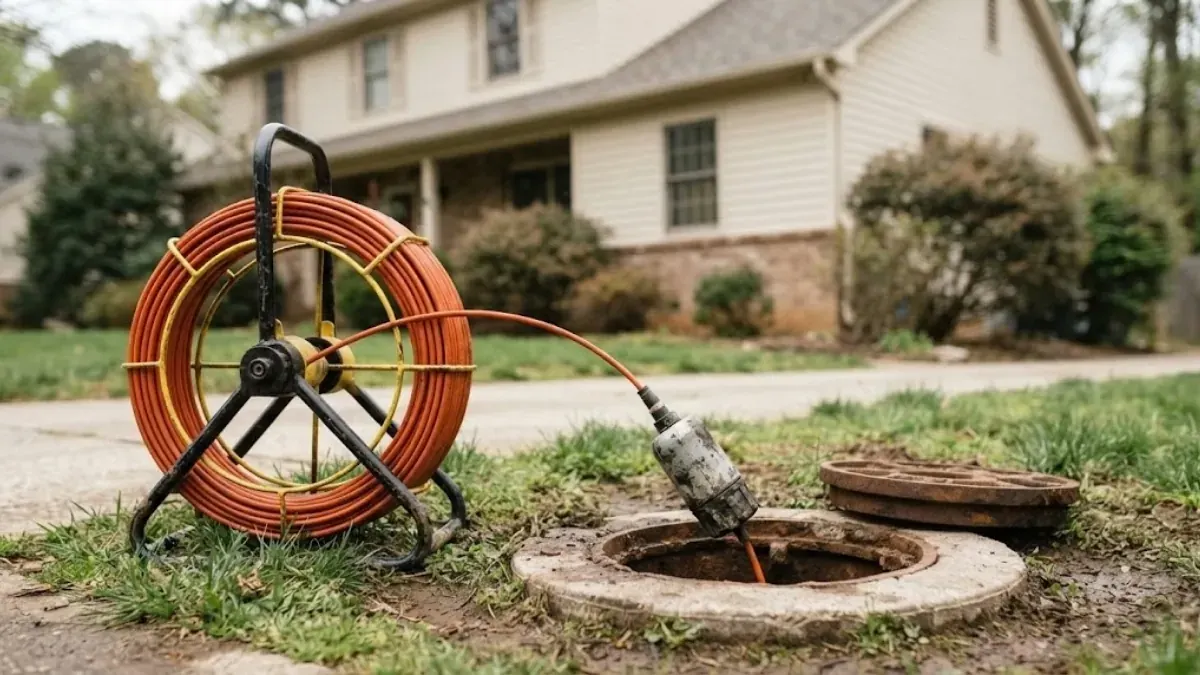
A push camera has a self-leveling lens and LED lights on a flexible fiberglass rod. It is fed into the line through the cleanout, and the video shows on a monitor with a distance counter.
Many units also carry a sonde, a small transmitter near the lens. A handheld receiver above ground picks up its signal and tells us the depth and exact position of the camera, which is how a break is marked on the surface.
Three common reasons to scope the line
Each situation calls for a slightly different approach and a different kind of report.
Buying or selling a home
The inspection a home inspector does inside the house cannot see the underground pipe. A camera pass can reveal a cracked clay line or intruding roots before closing, when the findings can still be discussed with the seller. Sellers sometimes scope ahead of listing to avoid surprises.
Recurring clogs
A line that has been cleared two or three times in a year is likely damaged. The footage shows whether the culprit is grease, roots, an offset joint or a bellied section, and guides whether sewer line cleaning or repair is the right answer.
Locating a suspected break
Wet soil, a sunken spot or a sewage smell in the yard suggests a leak. The camera and locator can place the problem in the ground, which saves digging in the wrong place.
Reading the footage: what each finding usually means
You do not need to be a plumber to follow the video. This table covers what we most often see and what it points to.
| On the screen | What it is | Typical next step |
|---|---|---|
| Fine white or brown threads at a joint | Root intrusion | Root cutting, then repair or lining at the joint |
| A dip where water sits and debris collects | Belly or sag | Monitor, or dig and regrade if it holds water |
| A longitudinal crack along the pipe | Cracked pipe | Spot repair or lining |
| Rough, flaking orange-brown pipe wall | Corroded cast iron | Descale and line, or replace |
| Two pipe ends not lined up | Offset joint | Repair at the joint |
| Pipe goes dark or ends in dirt | Collapse or break | Locate, then dig or replace |
| Clear, smooth pipe with normal flow | Healthy line | Maintenance as needed |
Findings like a crack or a collapse may need sewer line repair, and we will quote that separately and in writing.
What to ask for when buying a home
If your offer depends on the sewer line, get these items in writing.
- The full recordingAsk for the video file with distance counts, not just a summary. You or another plumber may want a second opinion.
- The pipe material and sizeClay, cast iron, ABS, PVC and Orangeburg have different lifespans and repair options.
- Locations of any defectsA defect marked in feet from the cleanout can be priced and relocated for repair.
- Whether the full run was seenA camera that could not pass an obstruction did not inspect the whole line. The report should say so.
- Where the private line endsAsk the City Water & Sewer Division where public responsibility ends so you know which part would be yours to repair.
Do not rely on a seller's older report without checking its date. A line can change in a few years.
What affects the price of a sewer camera inspection
This is a smaller job than a repair, but the price still depends on your property.
Want your real number? Call the line and tell us what you are seeing. We will give you a clear price before work starts.
Call (213) 672-5590The limits of a camera inspection
A camera shows the inside of the pipe, but it cannot predict the future. A line with minor roots today may be fine for years, or may need work soon, and the footage only supports an informed guess.
A camera also cannot enter a line that is fully blocked, so we may need to clear the pipe first. And it does not replace a permit inspection. Permit rules vary, so ask the City of Huntington Park building department before any repair.
What to check before you call
A few minutes of preparation helps us plan the visit and keeps the price accurate.
- Find the cleanoutIt is a capped pipe at ground level near the house. Tell us where it is, or that you cannot find one.
- List the symptomsWhich fixtures are slow, when it began, and whether sewage has ever come up.
- Gather the historyPast plumbing invoices, an earlier camera report, or a home inspection note help.
- Clear accessRemove planters, stored items or vehicles from the cleanout area.
If the line is overflowing right now, call the line and say so. We will treat that as a backup call and not a scheduled inspection. A camera report is only useful against a standard, and for drain lines that standard is the California Plumbing Code (UPC based) on slope, joints and materials.
What the visit looks like
Most inspections take a short visit, though a long or complicated line can take more time.
- Find accessWe use the main cleanout. If there is none, we may pull a toilet to feed the camera in.
- Run the cameraThe camera is pushed toward the street connection while we record and call out features.
- Mark any defectFor a break, we use the locator to mark the spot and depth on the ground.
- Walk you through the videoWe show you the findings on the monitor and explain what they mean in plain terms.
- Give you the recordingYou get the footage and a written note of any findings and options.
Camera work for properties across town
The same service is available for owners and buyers in nearby towns, including South Gate, for example. Call the line and the dispatcher will confirm the address and schedule.
Questions homeowners ask
A straightforward residential line is a short visit. Long runs, multiple branches or a line that must be cleaned first take longer. We do not promise a specific arrival window, but we offer same-day appointments when available.
Yes. A camera with a locator transmitter shows the break on screen and lets us mark its depth and position above ground. That avoids digging in the wrong spot and helps price the repair.
If the home is older or the lot has mature trees, it is a smart step. Underground defects do not appear in a standard home inspection. The footage can support a repair credit or a price discussion.
We prefer someone is present to show us the cleanout and see the footage. If that is not possible, tell us ahead of time who can authorize access and receive the report.
Not usually. A fully blocked line must be cleaned first, then scanned. We will explain what it takes, and see our sewer line cleaning page for how that works.
It shows the pipe and the distance to any defect. The boundary of public responsibility is set locally, so ask the City Water & Sewer Division where yours ends. We give you the distance to share.
Yes. You receive the recording and a written note of the findings, so you can show a second contractor, a seller or an insurer.