Choosing the right size before anything is ordered
Sizing starts with how many people use hot water at the same time, not with the square footage of the house. A couple with one bathroom is well served by a 30 or 40 gallon tank. A family of five with back-to-back morning showers may need 50 gallons or more, or a unit with a faster recovery rate.
We ask about peak use, number of bathrooms, large soaking tubs and appliances that draw hot water, then recommend a first-hour rating that fits. Oversizing wastes standby energy, and undersizing leaves the last shower cold.
Installation choices at a glance
The equipment type shapes everything else about the job: space, venting, power and long-term cost.
| Option | Best fit | Installation needs |
|---|---|---|
| Gas tank | Homes with gas service, fast recovery | Gas line, flue or vent, relief valve, bracing |
| Electric tank | Homes without gas, simple setups | Dedicated 240 volt circuit, relief valve, bracing |
| Heat pump (hybrid) | Garages and large utility closets | Airflow, condensate drain, electrical circuit |
| Tankless gas | Space-limited homes, steady demand | Larger gas line, special venting, possible condensate drain |
| Tankless electric | Small apartments, point-of-use | Very high amperage circuit, panel capacity |
If you are leaning toward on-demand heat, the tankless water heater page covers the trade-offs in depth.
Venting, gas and electrical connections
Gas heaters must exhaust combustion gases safely. We check the flue slope, clearances, draft hood and termination, and we size the gas line and shutoff for the new load. A heater in a closet or alcove needs proper combustion air, and a bad vent is one of the most dangerous mistakes in older homes.
Electric units need a circuit sized for the heating elements, with a disconnect where required. Replacing an old gas tank with an electric or heat pump model changes the work completely, since it removes the vent and adds wiring, and our plumber will explain who handles each part.
Expansion tank, relief valve and drain pan
These small parts protect your plumbing and your floors, and they are part of a proper install.
- Thermal expansion tankHeating water makes it expand. In a closed system, with a pressure regulator or check valve, that pressure needs somewhere to go, or fixtures and the heater suffer.
- Temperature and pressure relief valveThis is the safety valve that opens when pressure or heat gets too high. Its discharge pipe must run to a safe location.
- Drain pan and pan lineA pan under a heater in a finished space catches a slow leak and directs it away from walls or ceilings below.
- Shutoff valves and flex connectorsA full-port ball valve on the cold supply, and new corrosion-resistant connectors, make future service easier.
- Dielectric or brass fittingsJoining copper to a steel tank needs the right fitting to slow galvanic corrosion at the connection.
Earthquake bracing and permit questions
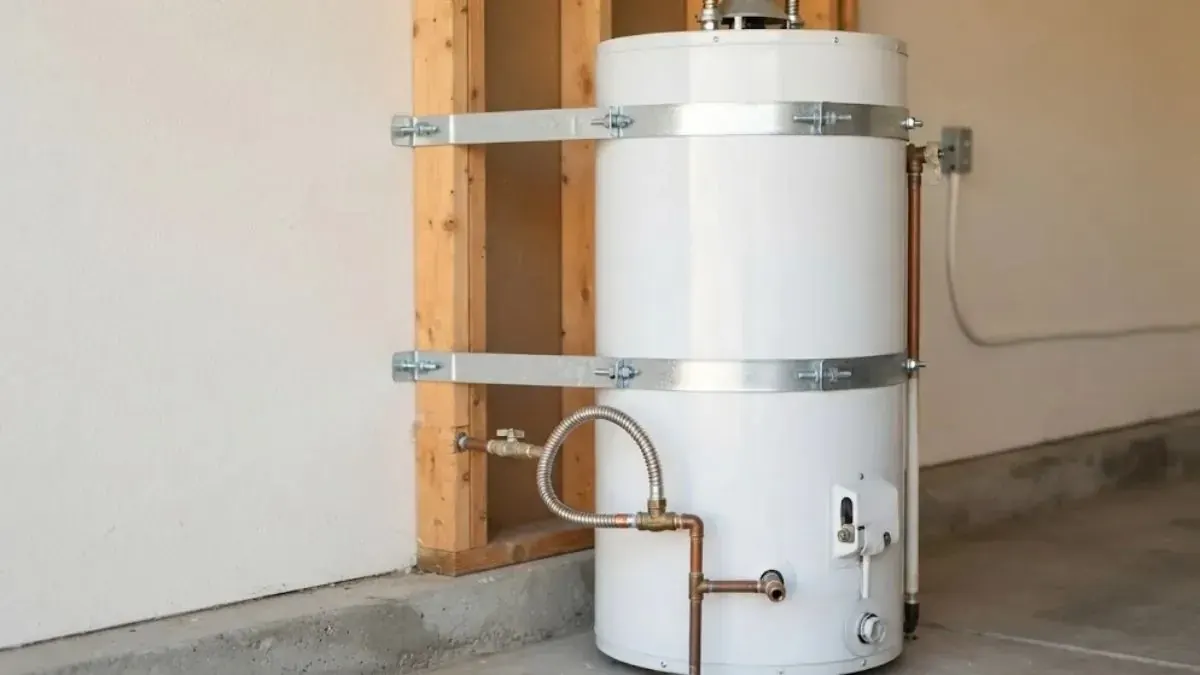
Seismic strapping is state law here (Health and Safety Code 19211), and the install itself follows the California Plumbing Code (UPC based) or any local amendments. Strapping goes in with the unit, since a tank that tips can snap gas and water connections.
Permit requirements differ by job, so put the question to the City of Huntington Park building department ahead of time. A planned install gives you time to ask that question, instead of making it in a hurry after a flood.
What shapes an installation quote
We quote the whole job, parts and labor, before we start.
Call us with your home type, fuel and the current heater, and we will explain the options and a clear price.
Call (213) 672-5590What installation day looks like
A planned install is calmer than an emergency swap. Here is how the day usually goes.
- Walk-throughThe plumber checks the location, clearances, access, gas and electric supply, and confirms the plan with you.
- Protect the spaceWe lay floor protection and set up a path from the truck to the heater location.
- Remove or prepareIf a unit is being replaced, we drain and take it out. For a new location, we run supply, vent and drain lines.
- Set, connect and braceThe tank is set on its pan, connected, vented and strapped, with a relief valve and discharge pipe added.
- Fill, test and explainWe purge air, check for leaks, light or power the heater, set the temperature and show you the shutoffs.
Most tank installs finish in a single visit. A fuel change, a new vent run or a tankless conversion may take longer.
Before you call for an install quote
A few checks make the quote more accurate.
- Read the data plateNote the brand, tank size, fuel and age of the current heater.
- Measure the spaceRecord the height, width and depth of the closet or alcove, and the door width.
- Count the usersThink about how many people use hot water in the morning peak.
- Find the shutoffsLocate the main water shutoff and the gas valve or electrical breaker.
- Ask your landlordRenters should check who owns the heater and who must approve the work.
Photos of the heater, the vent and the closet help us plan the right parts.
Hard water, flushing and the install that lasts
Huntington Park supply is hard. The city's 2025 water quality report lists groundwater at 214 mg/L average hardness and Metropolitan Water District water at 235 mg/L, both in the very hard range of the USGS scale. The blend changes by tap and season.
That is why we install a drain valve you can reach, leave room to service the anode rod, and suggest a yearly flush. If you want to cut the scale at the source, see water softener and filtration. For a tank that already failed, the replacement page covers the urgent route.
Before you buy a heater on your own
A heater bought at a store still needs a compliant install, and the wrong size, vent or fuel can create costly problems. Talk to a licensed plumber before purchase, so the unit fits the space and the code. Check any contractor's license on the CSLB website.
Questions homeowners ask
A standard tank install usually takes a few hours once the unit is on site. A fuel change, a vent reroute or a tankless conversion takes longer because of extra piping, electrical or venting work. We confirm the expected time when we quote the job.
If your home has a closed system, such as a pressure regulator or check valve at the meter, usually yes. Thermal expansion has nowhere to go and raises pressure. We test your house pressure and tell you whether it is needed for your setup.
Yes, California law treats it as required (Health and Safety Code 19211). Every unit we set gets strapped, and we can add straps to an existing heater that has come loose or was never secured.
Often yes, but it changes the venting, gas or electric supply and drain. Some rooms are not allowed for certain heaters. We check the space and code before we quote, and permits are a question for the city's building department.
It depends on peak demand more than home size. A small household may do well with 30 or 40 gallons, while larger families often need 50 gallons or more or a faster recovery rate. We ask about simultaneous showers and appliances to pick a rating.
Usually yes, if the tank is old or shows rust or damp spots. A planned install lets you compare types and schedule the work, instead of rushing after a flood. If the old tank already leaks, see our failed-tank replacement service.
Yes, our service area runs past the city line to places like South Gate. Call with your address, the fuel type and the current heater, and we will confirm coverage, answer questions and set up a scheduled visit.