When a toilet problem is an emergency
Water that keeps reaching the floor is an emergency. So is a bowl that climbs toward the rim and does not drop, a cracked tank that is draining, or a supply line that sprays when you touch it. In an apartment, a few hours of slow seepage can reach the ceiling of the unit below, and about 73 percent of occupied homes in Huntington Park are rented, so a small leak quickly becomes a neighbor and landlord problem.
A toilet that only hisses or refills every few minutes is usually not an emergency. It still wastes water around the clock, so treat it as same-day or next-day work and ask for a price before the visit.
Running toilet: what the sound and symptom tell you
Most running toilets come down to one of six parts. Matching the symptom to the part saves a visit that starts with guessing.
| What you notice | Likely cause | Usual fix | Repair or replace |
|---|---|---|---|
| Tank refills every few minutes with no flush | Worn flapper or warped flush valve seat | New flapper, or a seat repair kit | Repair unless the seat is pitted and the toilet is old |
| Constant hiss, water runs over the overflow tube | Fill valve not shutting off, or float set too high | Adjust the float, then replace the fill valve if it still leaks | Repair |
| Weak flush, bowl slow to refill | Clogged rim jets, low tank level, or a partial clog | Clear the jets, reset the water level, use a closet auger | Repair |
| Puddle around the base after flushing | Failed wax ring or loose closet bolts | Pull the toilet, inspect the flange, set a new wax ring | Repair, replace if the bowl is cracked |
| Drip from the tank bolts or the supply connection | Dried tank gaskets or a worn supply line | New tank bolt gaskets, braided supply line | Repair |
| Rocking toilet or recurring leaks at the floor | Broken flange or rotted subfloor | Flange repair ring or flange replacement | Repair the flange, often replace the toilet during the visit |
If your water bill climbed with no obvious reason, a silent flapper leak is one of the first things to check. Drop a few drops of food coloring into the tank, wait 15 minutes without flushing, and look at the bowl. Colored water in the bowl means the flapper or seat is leaking, and a larger hidden leak elsewhere is covered under leak detection.
What to do while you wait for the plumber
Ten minutes of preparation limits the damage and speeds up the visit.
- Stop the waterTurn the stop valve behind the toilet clockwise. If it will not close, shut the main.
- Stop flushingDo not flush a rising bowl. Lift the tank lid and hold the float up if the tank is refilling.
- Protect the floorLay towels, move rugs and electronics, and use a bucket if water is still dripping.
- Keep the water out of the drain lineDo not pour chemical drain cleaner into a toilet. It can burn the technician and does not clear most clogs.
- Note the detailsWrite down what happened, what you tried and where the main shutoff is.
Photograph any water damage before you clean up. It helps with a landlord or insurance claim. Toilet flanges, wax rings and supply stops are set to the California Plumbing Code (UPC based), including minimum clearances around the bowl.
Clogged or failing: how to tell the difference
A clog and a failing toilet feel alike at 2 a.m., yet they call for different fixes. The quickest test is to flush once, watch the water level, and check whether other drains in the home are also slow.
Signs it is a clog
The bowl fills and drains slowly, gurgles, or rises and then settles after a plunger. A flange plunger and a closet auger clear most single-toilet clogs. If a tub or sink nearby also gurgles when you flush, the blockage is in the branch or main line, and drain cleaning with a cable machine is the right call, not a new toilet.
Signs the toilet itself is failing
Repeated clogs from the same fixture, a bowl that never fully empties on a clear line, hairline cracks, and a base that moves under your weight all point to the fixture. Older toilets from before low-flow designs often have worn trapways and weak flushes, and patching them tends to cost more over a year than replacing them.
The supply valve will not shut off
The small valve on the wall behind the toilet is called the stop or angle stop. Old multi-turn stops freeze with mineral buildup, and forcing one can snap the stem and start a leak. Work in this order.
- Try the valve gentlyTurn it clockwise by hand, no wrench at first. If it moves a little, keep going until water stops filling the tank.
- Lift the float to buy timeLift the tank lid and raise the float or the fill valve arm so the tank stops refilling while you work on the next step.
- Shut off the water at the mainClose the home's main shutoff, usually near the water meter or where the line enters the building. In a rental, ask the manager where the unit valve is.
- Do not keep forcing a stuck stopA valve that will not close, or one that leaks around the stem when turned, needs replacing with a quarter-turn ball valve. The same swap applies to sinks, covered under faucet and sink repair.
- Call the 24/7 lineTell us what the valve does when you turn it. We bring a replacement stop and supply line so the fix can happen in one visit.
What decides the price of a toilet repair
Toilet jobs range from a ten-minute flapper swap to a flange rebuild, so a single flat number would mislead you. These are the things that move the price.
Want your real number? Call the 24/7 line, describe what the toilet is doing, and we will give a clear price before work starts.
Call (213) 672-5590Wax rings, flanges and the leak at the base
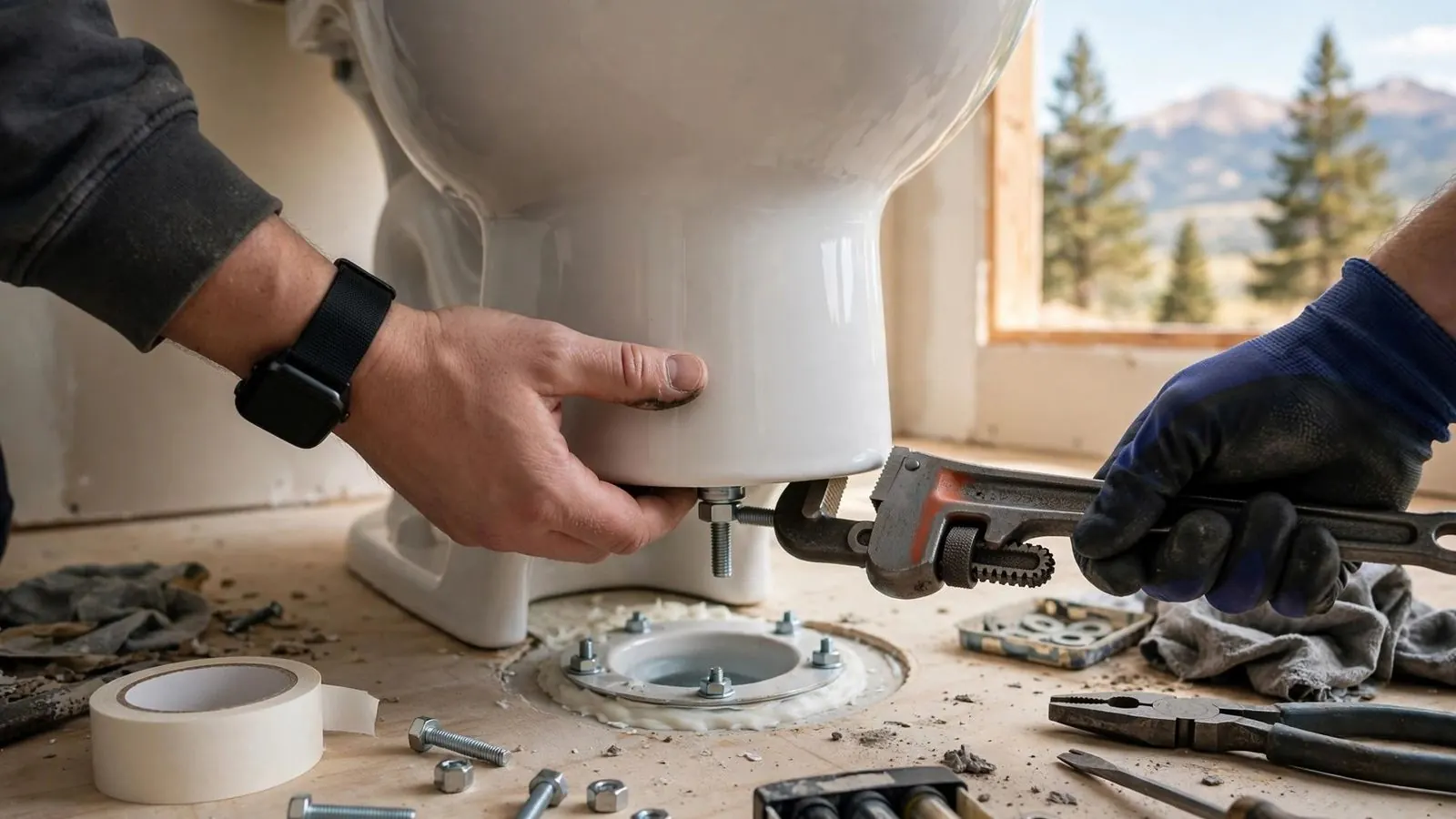
The wax ring is a seal between the bottom of the bowl and the flange, the flat ring on the floor that connects to the drain. If it fails, you see water at the base after a flush, smell sewer gas, or notice the floor around the toilet turning soft. The fix is to shut off the water, drain the tank, lift the toilet, scrape the old wax, inspect the flange and set a fresh ring.
The flange decides the repair. One that sits below the finished floor, is cracked or has rusted bolts will not hold a new seal, so a stainless repair ring, a tile spacer or new flange pipe may be needed. A soft subfloor means the leak has run for a while, and if the bowl is also cracked or the toilet has failed before, replacing it during the same visit usually costs less than patching it twice.
Installing or replacing a toilet
A replacement is quicker than most people expect, but the details matter for the first flush and the next ten years.
Fit and style
Measure from the wall behind the toilet to the closet bolts. Twelve inches is the common rough-in, and older homes sometimes use 10 or 14. Round bowls fit tight bathrooms, elongated bowls sit more comfortably, and comfort-height seats are easier on knees.
What the visit includes
We shut off and drain the old unit, remove it, inspect the flange and the floor, set a new wax ring or gasket, level and bolt the new bowl, connect a braided supply line, and test several flushes for leaks. Haul-away of the old fixture can be included when you ask in advance.
Hard water and toilet parts in Huntington Park
The city's 2025 water quality report lists hardness averaging 214 mg/L in groundwater and 235 mg/L in imported supply, both very hard (above 180 mg/L). For a toilet, that means scale builds on fill valve seals, the flapper seat and the rim jets, so a flapper may wear out sooner and a weak flush may be mineral buildup. Hardness varies by tap, so test yours, and for scale on every fixture ask about water softener and filtration.
Questions homeowners ask
Yes. Our 24/7 emergency line is available nights, weekends and holidays for overflowing toilets, leaks at the base and supply valves that will not close. We offer same-day appointments when available and explain the plan and price before we start. Close the stop valve or the main in the meantime.
Usually the flapper is not sealing, the fill valve is not shutting off, or the float is set too high. Mineral scale on the flapper seat is common in very hard water, and a quick part swap often solves it.
Look for water at the base after flushing, a toilet that rocks, a sewer smell in the bathroom or soft flooring. These point to a failed seal. The ring itself is cheap, but the toilet must be lifted to replace it, and the flange has to be inspected at the same time.
If only one toilet is slow and a plunger or closet auger clears it, it is a local clog. If a tub, shower or sink also gurgles or backs up, the blockage is farther down. In that case the line needs cable or jet work rather than a toilet replacement.
Yes. Old multi-turn valves often seize and leak at the stem. We replace them with quarter-turn ball valves and new braided supply lines. If the valve will not close at all, we may need to shut the building's main first, so tell us where yours is.
That depends on your lease and California tenant law, which we cannot interpret for you. Report the problem in writing and keep photos. We can describe the work and the cause in plain language so you and your landlord can sort out responsibility. Managers with units in Huntington Park and South Gate can use the same number.