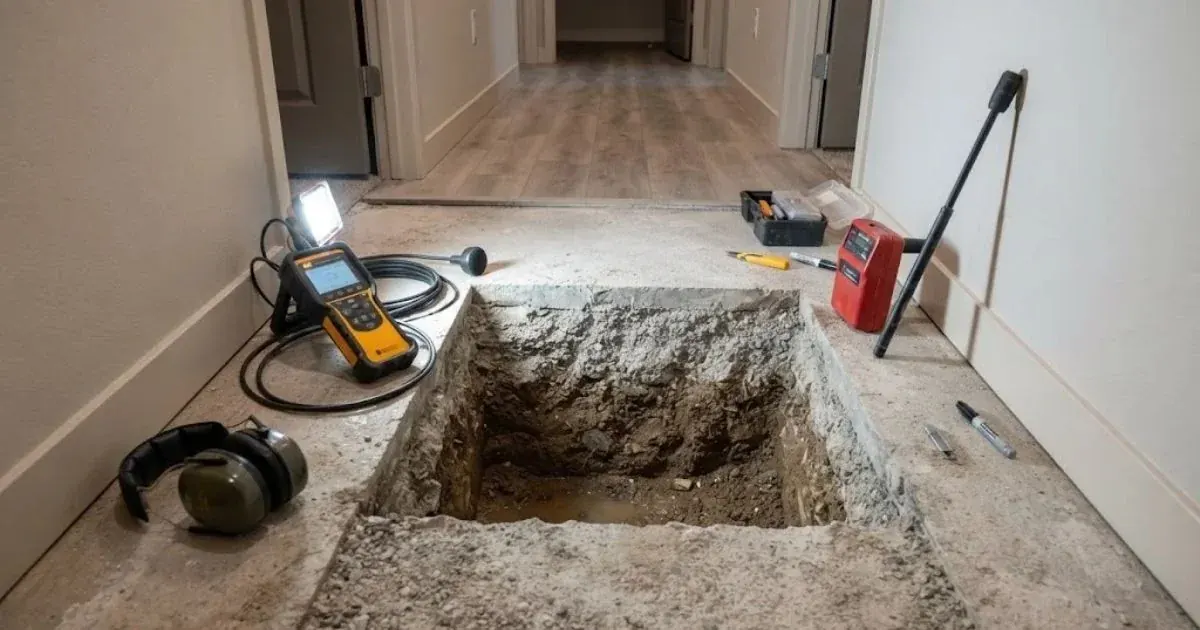
Eight signs the water may be escaping under the floor
One sign can have an ordinary cause. Two or three together are a good reason to get the line tested.
- A warm or hot spot on the floorA leaking hot line under a slab can heat the concrete above it. Walk barefoot, since tile and wood can hide mild warmth until you step on it.
- The sound of running water when everything is offA faint hiss or trickle in a quiet house at night, with no fixture running, points to a pressurized leak.
- A water meter that moves with all taps closedThis is the clearest sign of a leak somewhere on the property, though it does not say where.
- A water bill that rises with no change in habitsCompare the last several months. A steady climb without a new guest or garden is a warning.
- Weak hot water or a sudden drop in pressureWater escaping underground lowers the pressure to your fixtures. If only the hot side is weak, the leak may be on the hot line.
- Damp carpet, lifting laminate or cupped wood floorsMoisture rising from below swells flooring and loosens glue. The pattern often follows the pipe route.
- A musty smell or mildew with no visible sourcePersistent mustiness in a closet or hallway can mean water has been present for a while. We make no health claims, but we do say find the moisture.
- New cracks in tile, baseboards or walls, or water at the slab edge outsideCracks have many causes, but cracks plus any sign above deserve a test. Wet soil along the foundation edge is a strong hint.
If you notice sudden heat, a spreading wet spot or the sound of rushing water, do not wait. Go to the next section only after you have shut off the water at the main.
Rule out the lookalikes
Many things imitate a slab leak. A few minutes of checking can save a service call, or confirm that you need one.
| What you notice | Common non-slab cause | Quick check | Points toward a slab leak if |
|---|---|---|---|
| Warm floor | Sun on a window wall, a water heater closet, a heating duct below | Check the time of day and what lies underneath | The warmth stays in one spot and follows a pipe route |
| Running water sound | A running toilet or a dripping faucet | Listen at each fixture, then close the toilet shutoffs | The sound continues after every fixture is off |
| High bill | A leaking toilet, irrigation or extra occupants | Test toilets with dye and check sprinkler timers | The meter still moves after you rule those out |
| Low pressure | A clogged aerator or a partly closed valve | Clean aerators and check the main valve position | Pressure drops at every fixture |
| Musty smell | Poor ventilation or a drain trap that dried out | Run water in unused drains and open windows | The smell persists near one floor area |
The meter test is the strongest discriminator. Our leak detection service uses it, plus listening equipment, to confirm what the meter suggests.
A five-minute check before you call
Turn off every tap, appliance and irrigation line, including the ice maker and the washing machine. Find the water meter, lift the lid carefully and look at the small flow indicator or low-flow dial. If it is spinning or the dial is creeping, water is moving somewhere.
Next, close the main shutoff valve at the house. If the meter indicator stops, the leak is inside the house side of the valve. If it keeps moving, the leak sits between the meter and the shutoff, which is outside the slab and is a water line problem.
Write down the meter reading, wait an hour with all water off, and read it again. A changed reading confirms it.
How a plumber finds a slab leak without breaking the floor
Good detection narrows the leak to a few feet before anyone touches the concrete. That keeps the repair smaller and the estimate more honest.
Isolation and pressure testing
The plumber closes off sections of the system and watches a gauge to learn whether the hot side, the cold side or the line from the meter is losing pressure. This tells you which pipe to look for.
Acoustic ground microphones
A sensitive ground microphone picks up the sound of water escaping a pressurized pipe. The plumber moves along the floor and marks where the sound is loudest.
Thermal imaging and line tracing
A thermal camera can show a heat trail from a hot water leak, and a pipe locator maps where the lines actually run. Used together they help confirm the exact spot before any floor is opened.
Your repair choices and what each one means
There are three common routes, and the right one depends on the pipe's age, the number of leaks and how much of the floor you can open.
A spot repair breaks the concrete directly over the leak, cuts out the damaged section and splices in new pipe. It is the least invasive when there is one leak in sound pipe.
A reroute abandons the slab line and runs new pipe overhead or through walls, which avoids the concrete and makes sense when the old pipe is failing in several places. Epoxy lining coats the inside of the pipe and suits some situations, but it is not right when the pipe is badly corroded or the fittings are leaking.
Our slab leak repair team can explain the trade-offs for your layout and tell you which option fits. Ask for the findings in writing, including how the leak was located and where the floor would be opened.
What to do in the next hour
Shut off the main water valve, open a low faucet to relieve pressure, and move rugs and electronics away from damp areas. Take dated photos of any wet flooring, then call your insurer to ask about coverage, since policies differ and we make no promises about claims. Call a licensed plumber on our 24/7 line the same day. Delay raises the risk of floor damage, mold and a larger repair.
Water, meters and rentals in Huntington Park
The City of Huntington Park Water & Sewer Division serves about 6,600 service connections, so a meter reading you cannot explain is a reason to call Public Works at 323 584 6274 and ask about your meter and recent reads. Record the reading yourself first, so you can compare. Keep in mind the city supply is groundwater plus Metropolitan Water District water, with hardness above 180 mg/L, so test your tap before blaming water chemistry for pipe wear.
Around 73 percent of occupied homes here are rented. If you rent, send a written notice to your landlord the same day you shut the water off, and keep photos, since a slab leak needs access to the floor and the owner has to approve it.
For the code side, the California Plumbing Code (UPC based) is the standard plumbers in the state work to, and a contractor needs a C-36 plumbing license from the CSLB to do this work.
Questions readers ask
A warm spot that stays in one place, appears in a house with a normal heating setup, and comes with a moving meter or the sound of running water is a strong candidate. Sunlight and ducts can also warm a floor, so a plumber should confirm with a pressure test and listening gear.
No. Pressurized water keeps escaping and the damage grows, including to flooring, soil and the foundation edge. Shut off the main if you suspect it and call the same day. Waiting also pushes up your water bill, since the meter keeps counting.
Not always. A reroute through walls or the attic avoids breaking the slab. Detection also limits the opening to the leak spot. Ask your plumber to compare spot repair and reroute, with the amount of floor each would open.
It can be. If you hear rushing water, see water at the slab edge or feel a hot floor, shut off the main and call our 24/7 line. We are available nights, weekends and holidays, with same-day appointments when available.
That depends on your lease and local rules, which we cannot decide for you. Report the leak to your landlord in writing right away, keep dated photos, and ask the owner or property manager about insurance. A licensed plumber's written findings help the discussion.