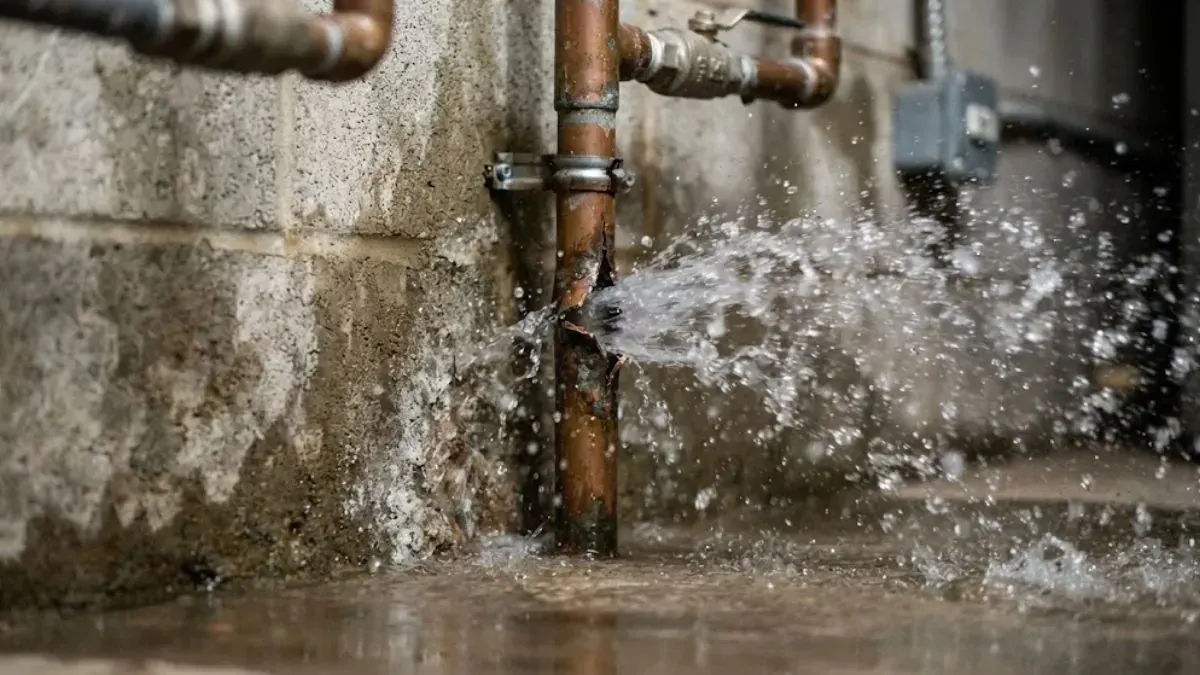
Minutes 0 to 2: stop the water
Move quickly, but do not wade into standing water near outlets.
- Find the main shutoffIt is usually near the water meter, at the front of the property, or where the main line enters the house. Turn a gate valve clockwise until it stops. A ball valve turns a quarter turn so the handle sits across the pipe.
- If it will not turnDo not force it with a wrench until it snaps. Try the meter-side valve with a meter key, if you have one, and tell the dispatcher it is stuck.
- Check for a local valveUnder sinks and behind toilets, small stop valves can isolate one fixture. Use them if the burst is at a single fixture.
Minutes 2 to 5: power, taps and the water heater
If water is near outlets, appliances or the electrical panel, switch off the circuits for that area, but only if you can reach the panel without stepping in water. If you cannot do it safely, stay out and wait for help. Never touch electrical equipment while standing in water.
Once the main is off, open the lowest faucet in the house and the highest one to drain the lines. Turn off the water heater, since a tank with no incoming water can overheat or damage an element. Gas units can be set to pilot or off, and electric units should be switched off at the breaker.
Minutes 5 to 8: contain and photograph
Move what you can out of the wet area, and use towels or a wet vac for standing water. Pull up rugs, but do not tear out walls. Leave the wet drywall, so the damage is visible to an adjuster and to the plumber.
Take photos and short video before you clean up. Show the pipe, the water line on the wall, damaged belongings and the water meter. Note the time you shut the water off. Insurance policies differ, so ask your insurer what they cover and how to file.
Which situation are you in?
Use this to decide how fast to call.
| What you see | What it usually means | Next move |
|---|---|---|
| Spray or gushing from a visible pipe | Burst or failed joint | Main off, call the emergency line now |
| Wet ceiling or bulging drywall | Supply or drain line leaking above | Main off, avoid the ceiling, call now |
| Water in the yard or street side | Service line failure | Shut off at the meter if you can, call right away |
| Slow drip at a fitting | A seep or loose connection | Shut the local valve, and book a same-day appointment |
| Hissing in the wall, no visible water | A pinhole leak | Check the meter for movement, then call |
If the meter dial turns with every tap closed, you have an active leak. That detail helps us bring the right tools, such as acoustic listening equipment.
Minutes 8 to 10: call, and tell us these things
Have this ready when you dial the 24/7 line.
- Where the water isRoom, wall or yard, and whether you can see the pipe.
- Whether the main is offSay if it turned, stuck, or leaks around the handle.
- Pipe materialCopper, galvanized steel, plastic or you do not know. It changes the repair.
- Water heater statusTell us if you turned it off.
- AccessGates, pets, and tenant status. If you rent, your landlord needs a call as well.
Mistakes that make a burst pipe worse
Many people reach for sealant or tape and leave the main on. Temporary wraps can slow a small leak, but they will not hold a pressurized split. Shutting the water is always better than patching it.
Others open walls too early, or run a wet vac across wet outlets. Keep the scope small until a plumber has traced the source. Listening first with an acoustic microphone often saves an unnecessary hole in the wall.
Do not run the heater dry
If you leave a gas or electric water heater on after the lines are drained, the tank may overheat or an element may burn out. Turn it off as soon as the main is closed.
Why the pipe material changes the plan
Copper usually splits at a joint or fails from a pinhole. Galvanized steel corrodes from the inside, so one burst often means other sections are close behind. Plastic lines can crack at fittings that were overtightened or stressed.
Tell the dispatcher what you know, even if it is a guess. A plumber who knows the material can bring matching fittings, a pipe cutter and press tools, which helps the repair finish in one visit when the situation allows.
What happens after you call
The plumber confirms the shutoff, finds the break, and gives you a clear price before work starts. Repairs vary. A copper split may need a section replaced, while old galvanized lines often point to a larger water line repair or partial repiping conversation.
We serve homes across Huntington Park and nearby towns, including South Gate and Bell. Same-day appointments are available when schedules allow, and the emergency line is staffed nights, weekends and holidays.
Huntington Park shutoff and water supply notes
The City of Huntington Park Water and Sewer Division serves about 6,600 service connections, with a contract operator. If the water is coming from the city side of the meter, shut off at your own valve and ask the division about the public line. The Public Works phone is on the city site.
The housing element calls Huntington Park nearly entirely built out, and about 73 percent of occupied homes are rented. In a rental, tell the landlord or property manager right away, and photograph everything for their insurer as well as yours.
For the code side, the California Plumbing Code (UPC based) is the standard plumbers in the state work to, and a contractor needs a C-36 plumbing license from the CSLB to do this work.
Questions readers ask
Only if you can reach the panel without standing in water and the water is near outlets, appliances or the panel itself. If you cannot do that safely, stay away and wait for help. Never touch electrical equipment while wet.
Policies differ, so read yours or call your insurer. Many distinguish sudden damage from long-term leaks. Take photos, keep receipts and note the time you shut off the water. We provide a written scope of work you can share.
A clamp or wrap can slow a small leak for a short time, but it is not a repair. A split pipe under pressure usually needs a cut-out and replacement section. Shut the water off first and call a licensed plumber.
Do not force it. Try the meter-side valve with a meter key if you have one, or open the lowest taps to relieve pressure. Tell the dispatcher it is stuck, because the plumber may need to replace the valve before repair.
Yes, if water is running that you cannot stop or it is reaching ceilings, outlets or neighbors. Call the 24/7 line. A slow, contained drip can often wait for a same-day appointment.