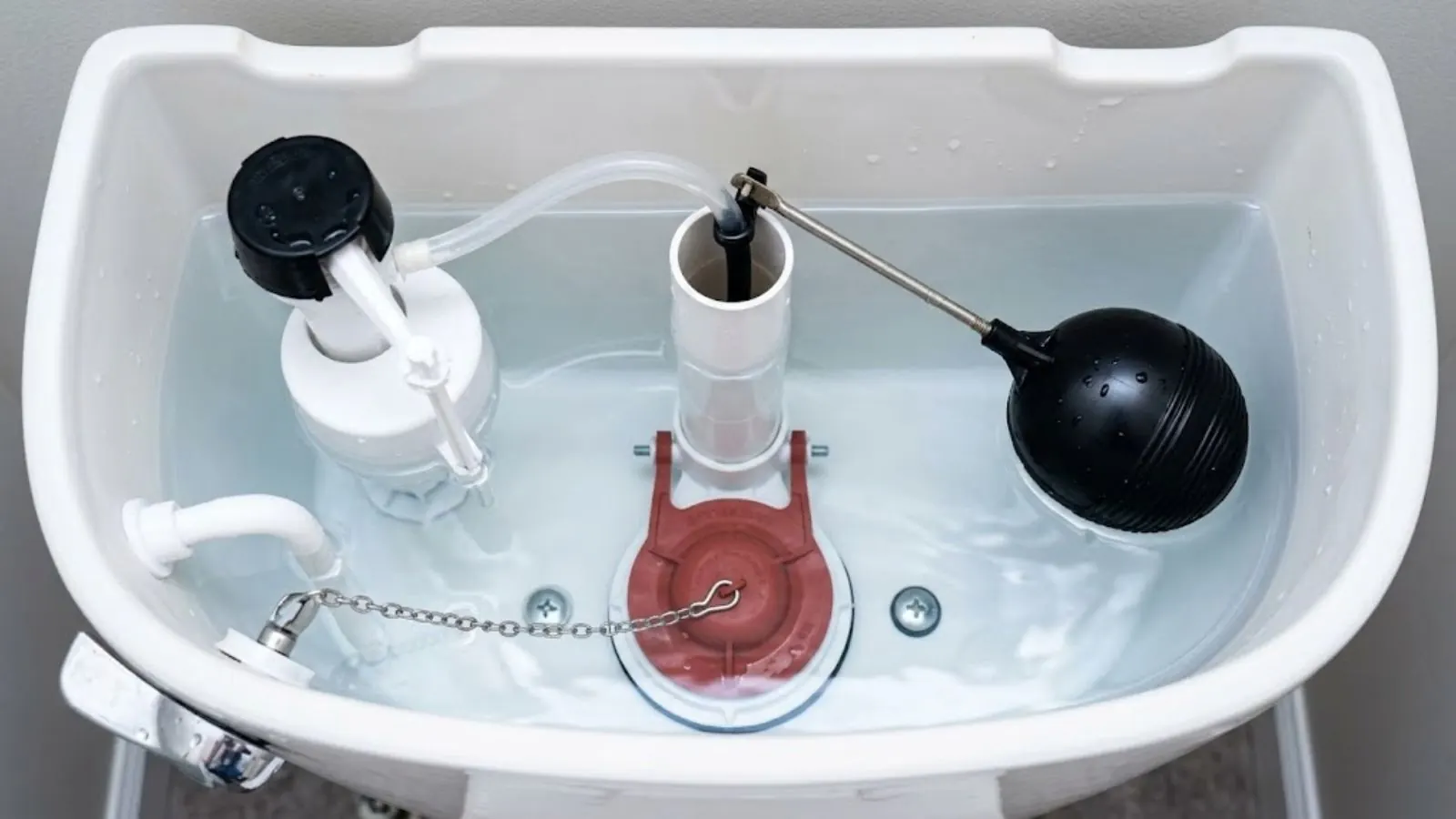
Keep the bowl from overflowing
Do not flush a second time to see if it cleared. If the bowl is near the rim, lift the tank lid and push the rubber flapper down to block more water from entering. Then turn the supply valve on the wall behind the toilet clockwise until it stops.
Lay old towels around the base and put on rubber gloves. If the water is sewage-colored, keep children and pets out of the room, and wash up thoroughly afterward. We make no health claims, but a clean-up with gloves and hot soapy water is simple good sense.
Plunger or auger: pick the tool by the clog
Two tools handle nearly every toilet clog. Choosing the right one saves a lot of effort.
| Tool | Works best for | Technique | Watch out for |
|---|---|---|---|
| Flange plunger (with the extra rubber sleeve) | Paper and waste clogs near the bowl outlet | Seat the flange in the drain hole and push gently, then pull sharply | A flat sink plunger will not seal on a toilet |
| Closet auger (toilet snake) | Clogs that sit deeper, or a toy or stuck object | Feed the cable into the trap and crank to hook or break the blockage | Scratching the porcelain, so keep the vinyl sleeve in place |
| Hand-cranked drain snake | Not for toilets | Use only on sinks and tubs | It can scar the bowl and miss the trap bend |
| Chemical drain opener | Not recommended | None | Burns skin, harms pipes and splashes back |
If you have no flange plunger, buy one. It costs little and is the single most useful tool for this job.
The plunger method, step by step
Give each step a real try. Most failed plunging comes from a poor seal or from stopping too soon.
- Check the water levelThe bowl should hold enough water to cover the plunger cup. If it is low, add water from a bucket. If it is nearly overflowing, scoop some out first.
- Seat the plungerPress the flange into the drain opening so the cup covers the hole fully. Tilt the plunger slightly to push out trapped air as you go down.
- Push gently, then pull hardThe first push should be soft, to avoid splashing. The pull is the strong stroke, because suction loosens the clog.
- Repeat about 15 to 20 strokesKeep the seal and the rhythm. You will often feel it give and hear the water drain.
- Test with a half-flushPour a bucket of water into the bowl, or flush once with your hand on the flapper chain ready. If it drains briskly, you are done.
- Plunge again if it is slowOne more round can finish a partial clog. If three rounds do nothing, move to the auger.
Using a closet auger without damaging the bowl
A closet auger is a short cable inside a bent tube that reaches the trap. Keep the protective sleeve against the porcelain and pull the cable back before you start.
Feed and crank
Slide the curved tip into the drain opening, push gently until it meets resistance, then turn the handle while pushing slightly. The tip either hooks the clog or breaks it apart.
Retrieve and flush
Pull the cable back slowly and clean what comes out. Test with a bucket of water, then a flush. If a child's toy or a brush comes out, you have found the cause and can stop there.
Is it only the toilet, or is it the main line?
A toilet clog affects one fixture. A main line clog affects several. Look for these clues before you keep plunging.
- Other drains gurgle or run slowlyA tub, shower or sink that bubbles when the toilet flushes points to a shared line.
- Water appears in the shower or a floor drainIf flushing sends water up the lowest drain in the house, the blockage is below the branches.
- More than one toilet is cloggedTwo clogs at once is rarely a coincidence. The common path is blocked.
- The clog keeps returning within daysA repeat clog suggests a partial blockage, roots or a damaged pipe that a plunger cannot cure.
- A sewage smell outdoors near the cleanoutA cleanout cap in the yard with standing water or odor means the main line is full.
If you see any of these, stop plunging. Pushing harder will only move waste around. Our drain cleaning team can clear and camera-check the line.
What not to do
Do not pour boiling water into the bowl, because it can crack the porcelain. Skip chemical drain openers, which sit in standing water, can burn you and are tough on older pipe. Avoid flushing wipes, even those labeled flushable, since they do not break down like paper. And do not keep flushing hoping the clog will clear, which only raises the water.
When to stop and call a plumber
Stop if three rounds of plunging and a careful auger pass do not help, if the toilet rocks or leaks at the base, or if water seeps from the floor. Stop too if you suspect a toy or a bar of soap is lodged, and the auger will not retrieve it.
A plumber can pull the toilet and inspect the trap from below, run a sewer camera to see the line and clear a main blockage with a drain machine. Our toilet repair and installation team also replaces a worn wax ring, fill valve or flapper in the same visit if those contributed to the problem.
Shared drains and hard water in Huntington Park
With about 73 percent of occupied homes rented and housing very densely packed, many toilets here share a building drain with neighbors. If you rent and several units back up, tell the landlord in writing the same day. For the public sewer main in the street, ask the City Water & Sewer Division through Public Works at 323 584 6274.
The city reports very hard water, with groundwater hardness near 214 mg/L and Metropolitan Water District water near 235 mg/L. Mineral scale can clog the small rim jets under the bowl lip and make a flush weak, which feels like a clog but is not one. If your flush is weak but the bowl drains, a vinegar soak of the jets may help, and you should test your own tap.
For the code side, the California Plumbing Code (UPC based) is the standard plumbers in the state work to, and a contractor needs a C-36 plumbing license from the CSLB to do this work.
Questions readers ask
Give it two or three rounds of 15 to 20 strokes with a flange plunger and a good seal. If the water does not move at all, switch to a closet auger. If that also fails, or other drains are affected, stop and call a plumber.
Use a closet auger, which has a protective sleeve and a curved tip made for the bowl. A standard drain snake can scratch the porcelain and often misses the trap. If you need more reach than a closet auger gives, that suggests the clog is past the toilet.
Common causes include using too much paper, flushing wipes, a low-flow toilet with a weak flush, or a partial blockage deeper in the line. If it clogs repeatedly in a short time, a camera inspection can find roots, a belly or damage that plunging will not fix.
You can try the plunger at any hour. If the bowl is overflowing, other drains are backing up or you cannot clear it, call our 24/7 line. We are available nights, weekends and holidays, with same-day appointments when available.
That suggests a shared building line. Do not keep plunging. Tell your landlord or property manager in writing and call a licensed plumber through them. If the blockage is in the public main in the street, ask the City Water & Sewer Division.