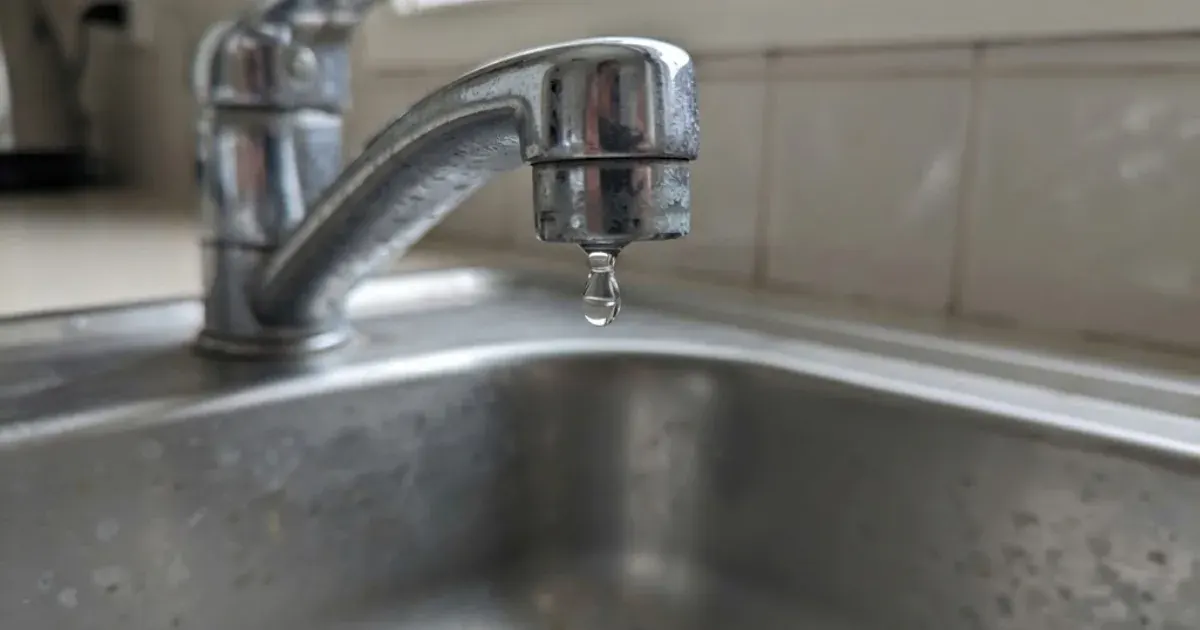
Match the leak to the part
Where the water shows up tells you most of what you need to know. Dry the faucet with a towel, run it for a minute, and watch where the first bead of water forms.
| Where you see water | Most likely cause | DIY level | Call a plumber when |
|---|---|---|---|
| Drip from the spout when off | Worn cartridge, washer or valve seat | Easy to moderate | The drip returns after a new part |
| Water around the handle base | Worn O-ring or loose packing nut | Easy | The handle is corroded and will not come off |
| Wet ring at the base of the faucet | Failed gasket or cracked body | Moderate | The faucet body is cracked or pitted |
| Damp cabinet or pooled water below | Supply line, angle stop or drain connection | Moderate | The shutoff valve will not close or is crusted shut |
| Water behind the wall or ceiling below | Concealed valve or pipe joint | Not DIY | Always |
If the faucet is dry but the cabinet floor keeps getting wet, the leak may not be the faucet at all. That pattern points to a drain connection or a hidden pipe, and a leak detection visit is faster than guessing.
Gather the right tools before you shut anything off
A faucet repair stalls most often at the moment you discover you need a part you do not have. Pull together this short kit first.
- Adjustable wrench and a small flat screwdriverThe screwdriver pries the decorative cap off the handle. Wrap the wrench jaws in a rag so you do not scar the chrome.
- Hex keysMany bathroom handles hold on with a tiny set screw under the cap or on the side. Try both metric and inch sizes.
- Plumber's grease and a few spare O-ringsSilicone-safe grease keeps the new seals from binding. O-rings are cheap, but the wrong size will leak again.
- The old part in your pocketCartridges look alike and are not. Carry the old one to the hardware store so you can match it exactly.
- A towel in the drainA dropped screw or clip in a bathroom sink is gone for good. Plug or cover the drain.
A brand name or model number stamped on the faucet body saves guessing at the parts counter.
Fixing a dripping spout, step by step
This sequence fits most two-handle and single-handle bathroom faucets. If yours looks different, stop at any step where you feel unsure and call.
- Close the waterTurn the oval or round handle on each angle stop under the sink clockwise until it stops. Open the faucet to bleed pressure. If a valve will not turn, do not force it.
- Remove the handlePry off the cap, back out the screw and lift the handle straight up. A stuck handle usually needs a gentle wiggle, not a hammer.
- Pull the cartridge or stemUnscrew the packing nut or retaining clip, then pull out the cartridge. Note which way the hot and cold ports face before it leaves the body.
- Inspect the seals and seatCracked rubber, flattened O-rings or a gritty seat all explain a drip. Scale on the seat can be wiped with a little vinegar and a soft brush.
- Replace the worn partsInstall the new cartridge or O-rings with a thin film of grease. Seat everything squarely before you tighten, since a cross-threaded nut can crack the body.
- Reassemble and test slowlyOpen the angle stops a quarter turn at a time. Check for weeping at the base, then run the faucet and look underneath with a flashlight.
Give it an hour, then press a dry paper towel to each connection to catch a slow weep.
Why a new part sometimes does not stop the drip
The usual reason is a damaged valve seat, the small brass surface the washer presses against. A seat that is scored or pitted lets water slip past even a brand new washer, and the fix is a seat dressing tool or a new faucet body.
Leaks under the sink need a different approach
The cabinet under a bathroom sink holds three common leak points: the flexible supply lines, the angle stop valves and the drain assembly. Feel each with a dry fingertip, since a slow weep may not drip visibly.
Braided supply lines wear out from the inside, and a frayed or rust-stained braid is a replace-it-now part. Angle stops often leak at the stem or leave the packing nut crusty, and a valve that will not fully close is one reason plumbers ask to replace it during the visit.
Drain leaks show up only while water is draining. Fill the basin, pull the stopper, and watch the slip nuts and the P-trap. A loose slip nut is a cheap fix, but a cracked tailpiece or corroded trap should be swapped.
Repair or replace the faucet
Repair makes sense when the faucet is in good shape and the cartridge is the only failing part. Replace when the body is pitted, the finish is peeling, parts are no longer sold, or you have already repaired it more than once. A replacement with plastic internals can fail sooner than the faucet you are fixing, so look for a solid brass body and a standard cartridge.
Signs the faucet should go
Green or white crust around the base, a handle that grinds, and a body that weeps from a hairline crack all point to replacement. If water is already staining the cabinet, replace the supply lines and angle stops while the faucet is out.
Signs a repair is enough
A smooth body, a handle that moves freely, and a drip that began recently usually mean a worn seal. A cartridge swap is the sensible first step, and it takes less time than shopping for a new faucet.
Stop and call a plumber if you see these
Call a licensed plumber if the angle stop will not close, if the handle or nut is seized, if water is coming through the ceiling below, or if you smell damp or see mold under the sink. Call if two part swaps have not stopped the drip. A plumber can replace the shutoff valve and trace a leak behind the cabinet wall. Our faucet and sink repair team handles the fixture and the valve in one visit.
Hard water and rentals in Huntington Park
The City of Huntington Park water system reports total hardness averaging 214 mg/L in its groundwater and 235 mg/L in the Metropolitan Water District supply, which the USGS scale calls very hard. In practice that means mineral scale on aerators, cartridges and valve seats, so a faucet that drips or sputters may need a vinegar soak and not a new part. Your tap can differ from the average, so test your own water before buying a softener.
About 73 percent of occupied homes in the city are rented. If you rent, report a faucet or cabinet leak to your landlord in writing and keep the date, because a slow leak that damages the vanity is easier to resolve when there is a record.
For the code side, the California Plumbing Code (UPC based) is the standard plumbers in the state work to, and a contractor needs a C-36 plumbing license from the CSLB to do this work.
Questions readers ask
The seal that stops the flow has worn. In a two-handle faucet that is usually a rubber washer or a pitted valve seat, and in a single-handle faucet it is usually the cartridge or its O-rings. Mineral scale can also hold the seal slightly open.
Often yes, if the angle stops close fully and the faucet is a standard design. Shut off the water, take photos as you disassemble, and replace the cartridge or O-rings with exact matches. Stop and call a plumber if a valve is seized, a part cracks, or the drip returns after the repair.
Dry everything, then press a dry tissue to each joint and the underside of the faucet body. Water on the tissue at the handle or spout means the faucet. Water at the braided hose or the valve means the supply line or angle stop.
A slow drip is not, but a spray, a seized shutoff valve or water through the ceiling below is. Close the angle stop, or the main shutoff if the stop fails, and call our 24/7 line. We are available nights, weekends and holidays, with same-day appointments when available.
Hard water does not crack a faucet, but scale builds on cartridges, seats and aerators and can hold a seal open or restrict flow. The city reports very hard supply, so cleaning scale often helps. We make no claim beyond that, so test your own tap if you are unsure.